Chargers & Cables

OEM Mobile Accessories Quality Control: How Manufacturers Ensure Product Quality

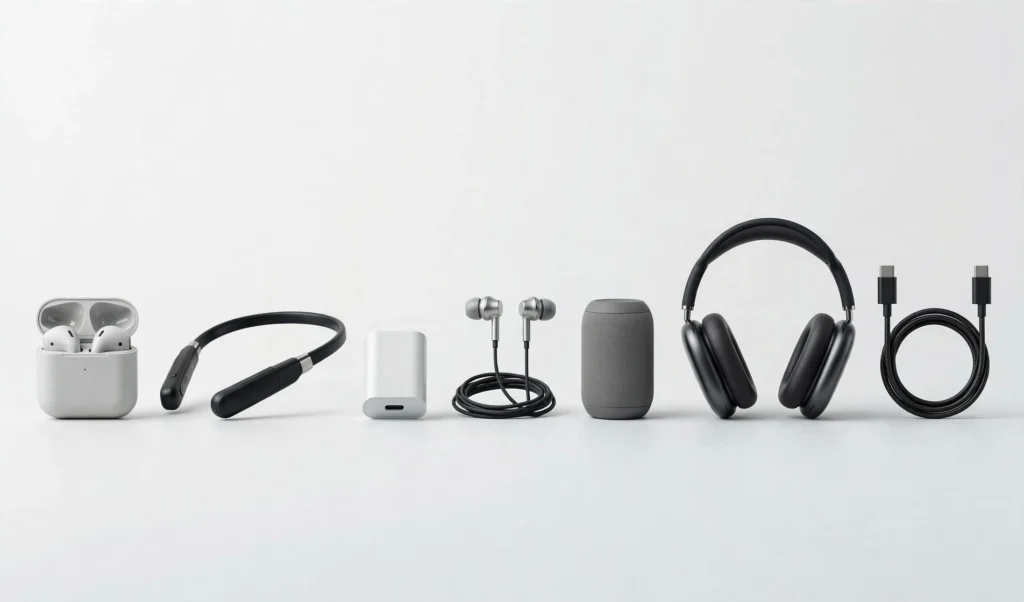
OEM Mobile Accessories Quality Control: How Manufacturers Ensure Product Quality – Quality is one of the most important factors when manufacturing mobile accessories for international brands, retailers and distributors. A product may have an attractive design and competitive price, but inconsistent quality can lead to customer complaints, returns, negative reviews and damage to a brand’s reputation. For this reason, OEM mobile accessories manufacturers use quality control procedures at different stages of the manufacturing process. Quality checks can begin with incoming components and continue through production, final inspection, packaging and shipment. Products such as wireless earbuds, Bluetooth speakers, neckbands, chargers and charging cables can have different testing requirements depending on their design and technical specifications. This guide explains how manufacturers approach OEM mobile accessories quality control, what is checked during production and how buyers can establish quality standards for OEM orders. What Is Quality Control in OEM Mobile Accessories Manufacturing? Quality control is the process of checking products and manufacturing processes to ensure that the finished goods meet predefined specifications and quality requirements. For an OEM order, quality standards should ideally be agreed between the buyer and manufacturer before mass production begins. These standards may cover: Product design Dimensions Materials Color Technical specifications Product performance Functionality Branding Packaging Accessories Quantity The exact quality-control process depends on the product category and the buyer’s requirements. Why Quality Control Is Important for OEM Mobile Accessories Quality control helps identify manufacturing problems before products reach customers. Effective quality checks can help reduce: Product defects Functional failures Packaging errors Incorrect specifications Quantity discrepancies Customer complaints Product returns Inconsistent production batches For international brands, quality consistency is particularly important because products manufactured under the same brand name should provide a consistent customer experience. OEM Mobile Accessories Quality Control Process A typical quality-control process can include several stages: Supplier and component evaluation Incoming material inspection First sample inspection In-process quality control Functional testing Product assembly inspection Branding inspection Packaging inspection Final quality inspection Pre-shipment inspection Not every manufacturer uses exactly the same process, and testing requirements can vary by product. Step 1: Define Quality Standards Before Production The first step is establishing clear quality standards. The buyer and manufacturer should agree on what the finished product should look like and how it should perform. A quality specification can include: Product dimensions Weight Material Color Battery capacity Charging time Playback time Bluetooth version Output power Charging port Driver size Connectivity Accessories Packaging For example, an OEM Bluetooth speaker project may specify the required output power, battery capacity, playback time, charging interface and product dimensions. A clear specification gives the production team a reference for quality checks. Step 2: Incoming Material Inspection Before production begins, components and raw materials may be inspected. Depending on the product, materials can include: Electronic components Batteries PCBs Speakers Drivers Charging connectors Cables Plastic housings Metal components Packaging materials The inspection can help identify damaged, incorrect or unsuitable components before they enter the production process. Step 3: First Sample Inspection Before large-scale production, the manufacturer can inspect the first production sample. The sample is compared against the approved product specifications and reference sample. The inspection can include: Product appearance Dimensions Materials Color Logo placement Functional performance Components Packaging The first sample can provide an early indication of whether production is following the approved specifications. Step 4: In-Process Quality Control Quality control should not only happen after production is complete. In-process inspections can be carried out during manufacturing. Production teams may check: Assembly Component placement Soldering Product housing Buttons Charging ports Wiring Product alignment Branding Identifying problems during production can allow manufacturers to correct the issue before a larger quantity is completed. Step 5: Functional Testing Functional testing is particularly important for electronic mobile accessories. The exact tests depend on the product. For wireless earbuds, testing may include: Bluetooth connectivity Left and right channel operation Charging Touch controls Microphone Battery performance Audio output For Bluetooth speakers, testing may include: Bluetooth connection Audio output Speaker performance Charging Buttons Microphone Battery operation Other product-specific functions For chargers, testing may include: Input Output Charging functionality Port operation Protection features where applicable For charging cables, testing can include: Charging performance Connector fit Data transfer where applicable Cable construction Connector quality Step 6: Battery and Charging Checks Many wireless accessories contain rechargeable batteries. Products such as earbuds, neckbands and Bluetooth speakers may require battery-related quality checks. Depending on the product, checks can include: Battery capacity Charging behavior Charging time Battery operation Charging port Power management Product operating time Battery-related testing and transportation requirements can vary depending on the product and destination market. Step 7: Appearance Inspection A product can be technically functional but still fail visual quality requirements. Appearance inspections may check: Scratches Dents Cracks Color differences Surface finish Mold marks Assembly gaps Logo placement Printing quality Product alignment This is especially important for branded products because the product’s appearance directly affects the customer’s perception of the brand. Step 8: Dimensions and Weight Inspection For OEM products, dimensions and weight can be part of the approved specifications. Manufacturers may check: Product length Width Height Weight Component dimensions Packaging dimensions Maintaining consistent dimensions can be important for packaging, transportation and product compatibility. Step 9: Branding and Logo Inspection OEM products are manufactured for a specific brand, so branding accuracy is important. Quality control may verify: Logo position Logo size Logo color Printing quality Engraving quality Brand name Model number Product labels The finished product should match the approved branding artwork or sample. Step 10: Packaging Quality Control Packaging should also be inspected before products are shipped. Checks may include: Box quality Printing Product information Logo Barcode User manual Accessories Product tray Labels Carton condition Packaging errors can affect a large number of products if they are not identified before shipment. Step 11: Final Product Inspection After production is completed, a final inspection can be carried out before shipment. The final inspection can cover: Product Appearance Color Surface finish Logo Physical damage Assembly Functionality Charging Connectivity Buttons Audio Battery Ports Other product-specific

OEM Mobile Accessories Quality Control: How Manufacturers Ensure Product Quality Read More »
OEM Mobile Accessories Product Development: From Sample to Mass Production

OEM Mobile Accessories Product Development: From Sample to Mass Production – Developing a mobile accessory for an OEM project involves much more than selecting an existing product and placing a logo on it. International brands, retailers and distributors often need products that match specific requirements for design, performance, branding, packaging and target-market needs. The OEM product development process typically starts with an initial product idea or reference sample and continues through product selection, customization, prototype development, sample approval, testing, packaging and finally mass production. A structured development process helps manufacturers and buyers reduce errors, control quality and prepare products for commercial launch. This guide explains the complete OEM mobile accessories product development process, from the first sample to mass production. What Is OEM Mobile Accessories Product Development? OEM mobile accessories product development is the process of creating or customizing a mobile accessory according to a buyer’s specifications. Depending on the project, the buyer may request: A completely new product design Modification of an existing product Custom technical specifications Custom colors and materials Brand logo placement Customized packaging Product-specific features Accessories and components Private-label branding Common products involved in OEM development include: Wireless earbuds Bluetooth speakers Bluetooth neckbands Wireless headphones Wired earphones Mobile chargers Car chargers Charging cables Multi charging cables Mobile stands Laptop stands Other mobile accessories The level of customization depends on the product, manufacturer capabilities, required investment and production quantity. Why Is Product Development Important for OEM Orders? A product development process helps ensure that the final product matches the buyer’s expectations before a large quantity is manufactured. Without proper development and sample approval, problems may appear during mass production, such as: Incorrect specifications Design differences Packaging errors Poor product performance Incorrect branding Component compatibility problems Quality inconsistencies A proper development process gives the buyer an opportunity to review and approve the product before committing to full-scale production. OEM Mobile Accessories Product Development Process The complete process can generally be divided into these stages: Product requirement Product research and selection Technical specification Initial sample Sample evaluation Product modification Prototype or final sample Testing and quality approval Branding and packaging Pre-production approval Mass production Final quality inspection Packaging and shipment Let’s understand each stage. Step 1: Define the Product Requirement The first stage is clearly defining what the buyer wants to manufacture. The requirement should include as much information as possible about the desired product. For example, for OEM wireless earbuds, the buyer may specify: Bluetooth version Battery capacity Playback time Charging port Driver size Microphone configuration Noise cancellation requirements Charging case design Product color Material Controls Packaging For a Bluetooth speaker, requirements may include: Speaker output Driver size Battery capacity Playback time Bluetooth version Charging port Microphone RGB lighting Product dimensions Product material Clear requirements help the manufacturer understand the project before development begins. Step 2: Product Research and Selection After receiving the requirements, the manufacturer can identify a suitable product platform or existing model. There are generally two approaches. Existing Product Customization The buyer selects an existing product and requests modifications. This can be suitable when the buyer wants: Faster development Lower development cost Lower MOQ Existing technology Customized branding Customized packaging New Product Development The buyer wants a product developed with more extensive customization. This may involve: New design New housing New components PCB modifications New functionality Customized firmware Custom packaging New product development can require more time, testing and development resources. Step 3: Finalize Technical Specifications Once the product direction is selected, the technical specifications should be documented. Specifications may include: Product dimensions Weight Material Battery capacity Charging time Playback time Bluetooth version Output power Driver size Charging interface Input and output specifications Connectivity Controls Compatibility Available colors The specifications should be finalized before the manufacturer begins the next stage. Step 4: Initial Sample Development The manufacturer prepares an initial sample based on the agreed product requirements. The first sample gives the buyer an opportunity to evaluate the basic product. The buyer can check: Product appearance Size Shape Material Color Build quality Functionality Technical performance User experience At this stage, the product may not yet represent the final production version. The purpose of the initial sample is to identify changes that may be required. Step 5: Sample Evaluation After receiving the sample, the buyer should carefully evaluate it. Evaluation can cover both physical and functional aspects. Physical Evaluation Check: Product dimensions Weight Surface finish Material quality Buttons Ports Hinges Logo placement Color Overall design Functional Evaluation Check: Charging Connectivity Battery performance Audio quality Controls Microphone Bluetooth connection Playback Other product-specific functions The buyer should prepare a clear list of changes instead of providing unclear feedback. Step 6: Product Modification Based on the sample feedback, the manufacturer makes the required modifications. Changes can include: Product color Material Housing Button design Logo placement Battery capacity Component selection Charging port Sound tuning Product functionality Packaging The number of development rounds depends on the complexity of the product and the amount of customization required. Step 7: Final Sample or Prototype Approval After modifications are completed, the manufacturer prepares another sample. This sample should be closer to the final production version. The buyer should confirm: Product design Specifications Performance Branding Color Material Accessories Packaging concept Once the buyer approves the final sample, the manufacturer can prepare for mass production. Step 8: Product Testing Testing is an important part of the product development process. Depending on the product, testing may cover: Charging performance Battery performance Bluetooth connectivity Audio performance Product durability Power output Temperature behavior Port functionality Button operation Wireless performance For products intended for international markets, additional testing or certification requirements may apply depending on the destination country and product category. The buyer should identify applicable market requirements before finalizing the product. Step 9: Branding and Logo Customization After product specifications are finalized, the branding requirements can be confirmed. Logo placement may be applied using methods such as: Printing Laser engraving Embossing Debossing Metal logo Sticker or label The appropriate method depends on the product material, surface and desired

OEM Mobile Accessories Product Development: From Sample to Mass Production Read More »

OEM Mobile Accessories Export from India: Process, Documentation & Shipping Guide

OEM Mobile Accessories Export from India: Process, Documentation & Shipping Guide – India has become an important sourcing destination for mobile accessories and consumer electronics. International brands, distributors, retailers and startups can work with Indian OEM manufacturers to develop and source products such as earbuds, Bluetooth speakers, neckbands, charging cables, mobile chargers, car chargers and other mobile accessories. However, exporting OEM mobile accessories from India involves several steps beyond manufacturing. Product selection, customization, quality control, documentation, packaging, customs clearance and international shipping all need to be planned properly. This guide explains the complete process of OEM mobile accessories export from India, including the documents required, shipping methods, packaging considerations and important points for international buyers. What Is OEM Mobile Accessories Export? OEM mobile accessories export means manufacturing mobile accessories in India according to the requirements of an international buyer and supplying those products to another country. An overseas buyer can work with an Indian OEM manufacturer to customize products according to their business requirements. Customization can include: Brand name and logo Product design Product color Technical specifications Packaging User manual Product labels Accessories included in the box Quantity Product features Common mobile accessories that can be manufactured and exported include: TWS wireless earbuds Bluetooth speakers Bluetooth neckbands Wireless headphones Wired earphones Charging cables Type-C cables Multi charging cables Mobile chargers Car chargers Mobile stands Laptop stands Other consumer electronic accessories The exact export requirements depend on the product, destination country and applicable regulations. Why Source OEM Mobile Accessories from India? India has a growing ecosystem for consumer electronics and mobile accessories manufacturing. International businesses can work with Indian manufacturers for product development, bulk manufacturing and private-label production. Private Label Manufacturing International brands can sell products under their own brand name by using private-label manufacturing services. Product Customization OEM manufacturers can customize products according to the buyer’s specifications, design requirements and target market. Bulk Manufacturing Manufacturers can produce products in bulk according to the agreed quantity, specifications and production schedule. Customized Packaging Buyers can request customized product boxes, labels, manuals and other packaging materials. Multiple Product Categories Businesses can source different types of mobile accessories from an OEM manufacturing partner depending on the manufacturer’s capabilities. OEM Mobile Accessories Export Process from India The export process generally starts with product selection and ends with international delivery. The major steps include: Product selection Requirement discussion Sample development MOQ and pricing Branding and packaging Purchase order confirmation Production Quality inspection Export documentation Shipping Customs clearance Final delivery Let’s understand each step in detail. Step 1: Select the Mobile Accessories Product The first step is selecting the product you want to manufacture and export. For example, an international buyer may be interested in: OEM earbuds OEM Bluetooth speakers OEM neckbands OEM charging cables OEM mobile chargers OEM car chargers OEM headphones After selecting the product, the buyer should define the required specifications. These may include: Product model Material Color Battery capacity Bluetooth version Charging port Output power Driver size Playback time Product dimensions Product weight Packaging requirements Branding requirements Having clear specifications helps the manufacturer prepare an accurate quotation and production plan. Step 2: Discuss Requirements with the OEM Manufacturer Once the product is selected, the buyer shares the requirements with the manufacturer. The manufacturer and buyer can discuss: Product models Available customization MOQ Product specifications Sample availability Packaging Branding Production timeline Quality requirements Payment terms Shipping arrangements For customized products, all important specifications should be finalized before mass production begins. Step 3: Request Product Samples Before placing a large OEM order, international buyers can request samples. Samples allow buyers to evaluate the product before committing to bulk production. The buyer can check: Build quality Product design Material and finish Sound quality Charging performance Battery performance Bluetooth connectivity Product functionality Branding Packaging Accessories If changes are required, the manufacturer can make modifications before starting mass production. For private-label products, it is recommended to approve the final product sample and packaging artwork before production. Step 4: Finalize MOQ and Pricing After approving the product, the buyer and manufacturer finalize the commercial terms. Important points include: Minimum Order Quantity Unit price Sample cost Packaging cost Branding cost Customization cost Tooling cost, if applicable Production timeline Payment terms Shipping terms Inspection requirements OEM pricing can vary depending on the product specifications, order quantity, customization and packaging requirements. Step 5: Finalize Branding and Packaging Branding is an important part of an OEM and private-label export order. The buyer may provide: Company logo Brand name Packaging design Product artwork User manual Barcode Product labels Required regulatory information Before production, the buyer should carefully check the final packaging artwork. Important details may include: Brand name Product name Model number Technical specifications Manufacturer information Importer information where required Country-of-origin information Safety information Barcode Applicable regulatory markings The requirements can differ between countries, so destination-market requirements should be checked before printing the final packaging. Step 6: Confirm the Purchase Order Once the product, pricing, specifications, packaging and commercial terms are finalized, the buyer can confirm the purchase order. The purchase order or commercial agreement should clearly mention: Product name Product model Quantity Unit price Total order value Specifications Packaging requirements Delivery terms Payment terms Shipping terms Inspection requirements A clearly documented order helps reduce misunderstandings during production. Step 7: Start Production After order confirmation, the manufacturer begins production. The manufacturing process may include: Raw material or component procurement Assembly Product customization Branding Quality testing Packaging Final inspection Shipment preparation The production timeline depends on product type, order quantity, customization requirements and component availability. Step 8: Quality Inspection Quality control is an important part of OEM manufacturing and export. The manufacturer and buyer should agree on quality standards before production. Quality checks may include: Product appearance Build quality Charging functionality Bluetooth connectivity Battery performance Audio quality Buttons and controls Charging ports Accessories Packaging Branding Product quantity For larger export orders, buyers may also arrange third-party inspection before shipment if required. Step 9: Prepare Export Documentation Once production is complete, the exporter prepares the

OEM Mobile Accessories Export from India: Process, Documentation & Shipping Guide Read More »

OEM Mobile Accessories: How to Select Products for Your Brand

OEM Mobile Accessories: How to Select Products for Your Brand –  Launching your own mobile accessories brand is an exciting opportunity, but selecting the right products is one of the most important decisions you will make. The mobile accessories market includes a wide range of products such as wireless earbuds, Bluetooth speakers, neckbands, mobile chargers, charging cables, car chargers, stands, wired earphones, and other everyday tech accessories. When working with an OEM mobile accessories manufacturer, you can customize products according to your brand requirements, packaging, specifications, colors, and target market. However, choosing products only because they are popular is not enough. You need to consider product demand, quality, pricing, features, competition, target customers, and long-term business potential. This guide explains how to select the right OEM mobile accessories for your brand and build a product range that can support your business growth. What Are OEM Mobile Accessories? OEM stands for Original Equipment Manufacturer. In OEM manufacturing, a manufacturer produces mobile accessories according to the requirements of another brand. For example, a business can work with an OEM manufacturer to source wireless earbuds with its own: Brand logo Product specifications Colors Packaging User manuals Product design requirements Retail box Accessories and included components Instead of manufacturing every component yourself, you can partner with an experienced OEM manufacturer and focus on branding, marketing, distribution, and sales. Why Product Selection Matters for Your Brand The products you select directly affect your brand’s reputation, customer satisfaction, margins, and repeat purchases. Choosing the wrong products can lead to: Low sales High return rates Customer complaints Excess inventory Poor reviews Reduced profit margins Difficulty competing in the market On the other hand, selecting products based on your target customers and market demand can help you create a stronger and more focused product portfolio. 1. Understand Your Target Customers Before selecting any OEM product, identify who you want to sell to. Different customers have different requirements. For example: Students and young consumers may prefer affordable earbuds, neckbands, charging cables, and compact speakers. Working professionals may look for reliable wireless earbuds, fast chargers, power accessories, and products suitable for calls and travel. Car users may be interested in car chargers, mobile holders, and dashboard or air-vent phone stands. Retail customers may prefer affordable products with attractive packaging and commonly requested features. Understanding your target customer helps you select products that have a clear purpose in your market. 2. Research Market Demand Market demand should be one of the first factors you consider. Before placing a bulk OEM order, research which accessories customers are actively purchasing. Look at: Search trends Online marketplaces Retail stores Competitor product ranges Customer reviews Social media trends Frequently requested features For example, if your target market has strong demand for wireless audio products, you could consider starting with OEM wireless earbuds, Bluetooth speakers, or Bluetooth neckbands. The goal is not to sell every type of accessory. The goal is to select products that have a realistic customer base. 3. Choose Products That Match Your Brand Position Your products should match the image you want your brand to create. If you want to build an affordable accessories brand, you may focus on: Entry-level earbuds Charging cables Basic chargers Wired earphones Affordable mobile stands If you want to create a premium technology brand, your product range may include: Premium wireless earbuds High-quality Bluetooth speakers Fast chargers Premium charging cables Advanced audio accessories A consistent product range makes it easier for customers to understand what your brand represents. 4. Start With a Focused Product Range One common mistake new brands make is launching too many products at once. Instead, consider starting with a small selection of products and gradually expanding your range. For example, an initial OEM product portfolio could include: Wireless Earbuds Bluetooth Neckband Bluetooth Speaker Mobile Charger Charging Cable Car Charger Mobile Stand Once you understand which products perform well, you can introduce additional models and variations. A focused range can also make inventory management, marketing, packaging, and quality control easier. 5. Evaluate Product Quality Carefully Price should not be the only consideration when selecting an OEM manufacturer or product. A low-cost product with poor quality can create customer complaints and damage your brand reputation. Evaluate factors such as: Material quality Build quality Battery performance Sound quality Charging performance Connector quality Durability Product finishing Packaging quality Safety and compliance requirements Always request samples before committing to a large production order. Testing samples gives you an opportunity to identify potential issues before the products reach your customers. 6. Compare Product Features Different models can have significantly different features. For wireless earbuds, for example, you may compare: Bluetooth version Battery capacity Total playtime Charging case capacity Microphone quality ENC or noise-reduction features Charging interface Touch controls Water resistance Fast charging For Bluetooth speakers, you might evaluate: Output power Battery capacity Bluetooth connectivity Playtime Charging interface RGB lighting Microphone functionality Portability Water resistance Choose features based on what your customers actually need rather than simply adding features to increase the specification list. 7. Consider Your Target Price Before selecting a product, determine the price range at which you want to sell it. Your target selling price should account for: Product Cost + Packaging + Shipping + Taxes/Duties + Marketing + Distribution + Retail Margin + Other Business Costs For example, if you want to sell an accessory in an affordable price segment, selecting an expensive OEM configuration may make it difficult to maintain your desired retail price. Discuss your target price with the manufacturer and determine which specifications can provide the right balance between quality and cost. 8. Check MOQ Requirements MOQ means Minimum Order Quantity. OEM manufacturers may have different MOQ requirements depending on: Product type Customization level Packaging Logo printing Color customization Product design Production requirements If you are starting a new brand, it is important to understand the MOQ before finalizing a product. Ask the manufacturer: What is the minimum order quantity? Is the MOQ different for customized packaging? Is logo printing included? Can

OEM Mobile Accessories: How to Select Products for Your Brand Read More »

OEM Mobile Accessories Manufacturing Cost in India: Complete Pricing Guide

If you are planning to launch your own mobile accessories brand in India, one of the first questions you may have is: How much does OEM mobile accessories manufacturing cost in India? The answer depends on several factors, including the product category, specifications, order quantity, customization, branding, packaging, testing, certification, and manufacturing requirements. Mobile accessories such as earbuds, neckbands, chargers, charging cables, wired earphones, Bluetooth speakers, car chargers, headphones, and mobile stands can have significantly different manufacturing costs. This guide explains the major factors that influence OEM manufacturing costs in India and provides indicative pricing ranges to help brands plan their budgets. Important: The prices mentioned in this guide are indicative planning ranges, not fixed quotations. Actual OEM prices can change based on product specifications, quantity, customization, packaging, testing, certification, and the manufacturer’s production setup. What Is OEM Mobile Accessories Manufacturing? OEM stands for Original Equipment Manufacturer. In OEM manufacturing, a business partners with a manufacturer to produce mobile accessories under its own brand. Depending on the project, the manufacturer may support product customization, branding, packaging, testing, bulk production, and quality control. For example, a company launching its own earbuds brand can work with an OEM manufacturer to produce earbuds with: • Custom logo• Custom colors• Selected specifications• Customized charging case• Brand packaging• User manual• Retail-ready packaging• Bulk production OEM manufacturing allows businesses to build their own mobile accessories brand without setting up their own manufacturing facility. How Much Does OEM Mobile Accessories Manufacturing Cost in India? There is no single fixed OEM price for mobile accessories. As a rough planning range, basic private-label accessories can start from tens of rupees per unit, while more advanced electronic products can cost several hundred rupees per unit or more. Current Indian wholesale references, for example, show USB charging cables around ₹10–₹60 and fast Type-C cables around ₹60–₹150. 18W chargers are listed around ₹120–₹220, while 20W Type-C chargers can range around ₹220–₹450. These are wholesale references rather than guaranteed OEM factory quotations, so customized OEM products can cost more depending on requirements. Indicative OEM Cost Table Product Indicative Manufacturing Range Basic Charging Cable ₹25 – ₹80+ Fast Charging Cable ₹50 – ₹150+ Multi Charging Cable ₹60 – ₹180+ Wired Earphone ₹50 – ₹150+ Basic Mobile Charger ₹100 – ₹250+ Fast Charger ₹180 – ₹500+ Car Charger ₹120 – ₹400+ Neckband ₹250 – ₹700+ TWS Earbuds ₹300 – ₹1,200+ Bluetooth Speaker ₹300 – ₹1,500+ Headphones ₹300 – ₹1,500+ Mobile Stand ₹40 – ₹200+ These figures are indicative planning ranges only. Actual OEM quotations depend on the exact model, components, quantity, branding, packaging, testing, certification, and customization. OEM Mobile Accessories Cost Breakdown The final manufacturing price is not simply the cost of the product itself. A typical OEM quotation may include several different cost components. 1. Product Components The components used inside a product have a major impact on manufacturing cost. For example, the cost of TWS earbuds can depend on: • Bluetooth chipset• Battery• Speaker drivers• Microphones• PCB• Charging case• Sensors• Buttons or touch controls• Plastic or metal housing Similarly, a mobile charger’s cost depends on its power rating, chipset, PCB, components, ports, housing, and safety requirements. 2. Product Specifications Higher specifications generally increase manufacturing costs. For example, a basic charging cable and a high-power fast charging cable are not manufactured to the same specification. The price can change based on: • Charging wattage• Data-transfer speed• Connector type• Cable material• Length• Chip requirements• Reinforcement• Connector quality For earbuds, specifications such as ANC, ENC, Bluetooth version, battery capacity, microphone quality, and playtime can affect the manufacturing cost. 3. Order Quantity and MOQ MOQ means Minimum Order Quantity. Manufacturers generally offer better per-unit pricing when the order quantity increases because production, procurement, setup, and packaging costs can be distributed across more units. For example: 1,000 units: Higher per-unit cost 5,000 units: Lower per-unit cost 10,000+ units: Potentially lower per-unit cost The exact pricing structure varies between manufacturers. Some Indian OEM manufacturers publicly list MOQs such as 500 units for chargers and earbuds and 1,000 units for cables. Always ask the manufacturer for the MOQ for your specific product and customization requirements. 4. Custom Logo Branding If you want your own logo on the product, the branding method can affect the final cost. Common options include: • Screen printing• Laser engraving• UV printing• Pad printing• Embossing• Debossing• Logo stickers• Customized molded branding The cost depends on the product surface, branding method, number of colors, logo size, and order quantity. At higher quantities, branding costs may become relatively small on a per-unit basis. 5. Custom Packaging Cost Packaging is another important part of OEM manufacturing. A basic OEM order may use standard packaging, while a private-label brand may require completely customized packaging. Custom packaging can include: • Printed box• Product tray• Logo printing• Product images• User manual• Warranty card• Barcode• QR code• Retail labels• Customized inserts Premium packaging generally increases the total cost per unit. 6. Product Design and Development If you use an existing product model with basic branding, development costs may be relatively low. However, if you want a highly customized product, you may need: • Product design• Industrial design• 3D modeling• Engineering• Prototype development• Tooling• Sample production• Testing This is one reason why a fully customized OEM product can cost significantly more than a standard private-label product. 7. Tooling and Mould Costs Some customized products require new moulds or tooling. For example, if you want a completely unique earbud charging case or custom-shaped speaker housing, the manufacturer may need to develop a new mould. Tooling can become a significant one-time development cost. The exact amount depends on: • Product size• Mould complexity• Material• Number of cavities• Precision requirements• Product design If you are starting with a limited budget, using an existing product platform can reduce initial development costs. 8. Quality Testing Quality testing is an important part of OEM manufacturing. Depending on the product, testing may include: • Charging performance• Battery testing• Audio testing• Bluetooth testing• Cable durability• Connector testing• Drop testing• Temperature testing•

OEM Mobile Accessories Manufacturing Cost in India: Complete Pricing Guide Read More »

oem vs odm

OEM vs ODM: What Is the Difference and Which Is Better for Your Brand?

oem-vs-odm – If you are planning to launch your own mobile accessories brand, one of the most important decisions is choosing the right manufacturing model. Two common options are OEM (Original Equipment Manufacturer) and ODM (Original Design Manufacturer). Both models can help businesses manufacture products under their own brand name, but they work differently. OEM manufacturing gives brands greater control over product specifications and customization, while ODM manufacturing allows businesses to use existing product designs with selected modifications and branding. Understanding the difference between OEM and ODM can help you choose the right manufacturing strategy for your business, budget, timeline, and target market. What Is OEM Manufacturing? OEM stands for Original Equipment Manufacturer. In an OEM manufacturing model, the brand provides the product requirements, specifications, design, features, or other technical instructions. The manufacturer then produces the product according to those requirements. For example, a mobile accessories brand may want to launch a customized pair of wireless earbuds with: A specific design Custom battery capacity Particular Bluetooth specifications Custom sound tuning Specific charging technology Brand logo Customized colors Custom packaging The OEM manufacturer develops or manufactures the product according to the brand’s requirements. How OEM Manufacturing Works A typical OEM process includes: Requirement analysis Product specification Design and engineering Prototype development Product testing Sample approval Mass production Quality inspection Custom branding and packaging Product delivery OEM is particularly suitable for brands that want a differentiated product and greater control over the final specifications. What Is ODM Manufacturing? ODM stands for Original Design Manufacturer. In an ODM model, the manufacturer already has an existing product design or product platform. The brand selects a suitable product and adds its own branding or makes certain modifications. For example, an ODM manufacturer may already offer a wireless earbud model. A brand can select that model and customize elements such as: Logo Product color Packaging User manual Accessories Some product specifications Exterior design elements This allows the brand to launch a product without developing everything from scratch. How ODM Manufacturing Works A typical ODM process includes: Select an existing product Discuss customization requirements Choose product specifications Add brand identity Approve samples Complete quality checks Begin bulk manufacturing Package and deliver the products ODM can be a practical option for startups and businesses that want to enter the market quickly. OEM vs ODM: Key Differences Although both OEM and ODM can be used for private-label products, their manufacturing approaches are different. Factor OEM ODM Product design Customized according to brand requirements Existing manufacturer design Customization High Moderate Product development Usually more involved Usually faster Development cost Generally higher Generally lower Launch time Can be longer Usually faster Brand control Higher More limited Product differentiation High Moderate Suitable for Established and product-focused brands Startups and businesses seeking speed Intellectual property considerations Often more brand-specific Design may originate with manufacturer The exact cost, MOQ, development time, and customization level depend on the manufacturer and product. OEM vs ODM: Which Is Better? There is no universal answer to whether OEM or ODM is better. The right choice depends on your business objectives. Choose OEM If You Want More Customization OEM may be the better option if your brand needs a product with unique specifications or a distinct design. For example, if you are launching a premium wireless earbuds brand and want a specific combination of design, battery performance, controls, materials, and packaging, OEM manufacturing may provide greater flexibility. Choose ODM If You Want a Faster Launch ODM can be useful when your primary objective is to get a product to market quickly. Instead of spending significant time developing a completely new product, you can select an existing model and customize it with your brand identity. This can be particularly attractive for startups, distributors, retailers, and businesses testing a new product category. OEM vs ODM for Mobile Accessories OEM and ODM manufacturing are widely applicable to mobile accessories and consumer electronics. Common products include: Wireless Earbuds Brands can manufacture customized TWS earbuds with different designs, battery capacities, controls, colors, and packaging options. Wired Earphones Businesses can select or develop earphone designs based on their target customers and price segment. Neckbands OEM and ODM neckband manufacturing can include customization of design, controls, colors, branding, and packaging. Bluetooth Speakers Brands can develop portable Bluetooth speakers with different form factors, battery capacities, controls, lighting, and branding options. Mobile Chargers OEM manufacturing can be used for customized wall chargers, fast chargers, and other charging solutions according to required specifications. Charging Cables Businesses can manufacture charging and data cables with different connector types, lengths, materials, colors, and branding requirements. Mobile Stands OEM and ODM models can also be used for mobile stands designed for desks, cars, travel, or other applications. Benefits of OEM Manufacturing OEM manufacturing provides several advantages for brands looking for product differentiation. 1. Higher Product Customization Brands can specify product features, materials, design requirements, colors, packaging, and other elements. 2. Stronger Brand Differentiation A customized product can help your brand stand apart from competitors selling similar generic products. 3. Greater Control The brand can have more influence over product specifications and quality requirements. 4. Better Long-Term Product Strategy OEM can be useful when a business wants to build a long-term product portfolio rather than simply resell an existing product. 5. Custom Branding and Packaging OEM manufacturing can support private-label branding, customized packaging, logos, manuals, labels, and other brand elements. Benefits of ODM Manufacturing ODM manufacturing also provides important advantages. 1. Faster Product Launch Because the basic product already exists, development can be faster than creating a completely new product. 2. Lower Development Requirements Businesses may not need to invest as heavily in product development and engineering. 3. Easier Market Entry ODM can make it easier for startups and new brands to enter the mobile accessories market. 4. Existing Product Experience Manufacturers may already have experience producing the selected product, which can simplify the manufacturing process. 5. Private Label Opportunities Businesses can sell existing product designs under their own brand through customized branding

OEM vs ODM: What Is the Difference and Which Is Better for Your Brand? Read More »

OEM Manufacturing Explained: How OEM Works, Benefits, Process & Examples

OEM manufacturing has become a popular business model for companies that want to launch products under their own brand without investing in a complete manufacturing facility. From mobile chargers and charging cables to wireless earbuds, speakers, neckbands, and other electronics, businesses can work with an OEM manufacturer to develop and produce products according to their requirements. But what exactly is OEM manufacturing? How does the OEM process work? What are its benefits, and how can a business choose the right OEM manufacturer? In this complete guide, we will explain what OEM manufacturing is, how it works, its benefits, the manufacturing process, OEM examples, OEM vs ODM, MOQ, costs, and important factors to consider before placing an order. What Is OEM Manufacturing? OEM stands for Original Equipment Manufacturer. OEM manufacturing is a process in which a manufacturer produces products according to the requirements, specifications, or designs provided by another company. The finished products can then be sold by that company under its own brand name. Instead of building its own factory, purchasing production machinery, hiring a manufacturing team, and managing the entire production process, a business can partner with an experienced OEM manufacturer. For example, a company wants to launch its own branded 25W mobile charger. Instead of manufacturing the charger itself, the company can approach an OEM manufacturer and specify: Required power output Product design Product color Logo placement Packaging requirements Quantity Technical specifications The OEM manufacturer then produces the charger according to the agreed requirements. This allows the company to focus on branding, marketing, sales, and distribution while the manufacturer handles production. How Does OEM Manufacturing Work? The OEM manufacturing process generally involves several important stages. A professional manufacturer works closely with the buyer to understand the product requirements and convert them into a finished product. 1. Requirement Analysis The process begins with understanding the buyer’s requirements. The manufacturer discusses important details such as: Product category Product specifications Features Quantity Target market Budget Branding Packaging Delivery requirements Clear communication at this stage helps avoid problems during production. 2. Product Selection The buyer can either select an existing product from the manufacturer’s product range or provide specific product requirements. For mobile accessories, common OEM products include: Mobile chargers Fast chargers USB chargers Car chargers Charging cables Multi-charging cables Wireless earbuds TWS earbuds Bluetooth speakers Neckbands Wired earphones Mobile stands An existing product can often be customized with branding and packaging according to the buyer’s requirements. 3. Product Customization Depending on the product and manufacturer’s capabilities, different levels of customization may be available. Customization can include: Brand logo Product color Product finish Packaging Labels User manuals Product specifications Accessories Design modifications Simple customization may involve only logo printing and packaging, while advanced OEM projects can involve changes to the product itself. 4. Sample Development Before starting bulk production, a sample is usually reviewed and approved. The buyer can check: Product quality Appearance Logo placement Product performance Materials Packaging Features Overall finishing If changes are required, they can be discussed before mass production begins. Sample approval is important because it reduces the risk of receiving a large quantity of products that do not meet the expected requirements. 5. Branding and Packaging Once the product specifications are finalized, branding and packaging requirements are confirmed. OEM manufacturers may provide options such as: Custom logo printing Custom product labels Retail boxes Printed packaging User manuals Warranty cards Barcode labels Stickers Custom packaging helps businesses create a professional and recognizable brand identity. 6. Quality Testing Quality control is an important part of OEM manufacturing. Depending on the product, testing may include: Performance testing Electrical testing Charging testing Battery testing Audio testing Connectivity testing Durability checks Material inspection Packaging inspection For electronic products such as chargers and charging cables, appropriate electrical and safety testing is especially important. 7. Bulk Production After sample approval, the manufacturer starts bulk production. The production process may include: Raw material and component sourcing Component assembly Product manufacturing Logo printing Product testing Quality inspection Packaging Final inspection Production time depends on factors such as product type, quantity, customization, component availability, and production capacity. 8. Final Inspection and Delivery Before dispatch, finished products are inspected against the agreed specifications. After the final quality check, the products are packed and delivered to the buyer. The buyer can then distribute the products through: Online marketplaces E-commerce websites Retail stores Distributors Wholesalers Corporate sales Its own website OEM Manufacturing Process at a Glance The complete OEM process can be summarized as: Requirement Analysis → Product Selection → Customization → Sample Development → Approval → Branding & Packaging → Quality Testing → Bulk Production → Final Inspection → Delivery Following a structured process helps businesses manage product quality, branding, timelines, and production requirements more effectively. Benefits of OEM Manufacturing OEM manufacturing offers several advantages to startups, retailers, distributors, established brands, and companies entering new product categories. 1. Build Your Own Brand One of the biggest advantages of OEM manufacturing is the ability to sell products under your own brand. Businesses can customize: Logo Product branding Packaging Product appearance Labels This allows companies to build their own identity instead of selling completely generic products. 2. Lower Initial Manufacturing Investment Setting up a manufacturing facility requires substantial investment in: Factory space Machinery Production equipment Raw materials Employees Testing equipment Inventory Manufacturing management OEM manufacturing reduces the need for a business to make these investments from the beginning. 3. Access to Manufacturing Expertise Experienced OEM manufacturers already have knowledge of product manufacturing, assembly, sourcing, testing, quality control, and packaging. Businesses can use this expertise without developing an entire manufacturing operation themselves. 4. Faster Product Launch Working with an established manufacturer can help businesses launch products faster compared with building a manufacturing facility from scratch. This can be especially useful in competitive markets where businesses need to respond quickly to customer demand. 5. Product Customization OEM manufacturing allows businesses to create products that match their brand requirements. Depending on the manufacturer, customization can include: Logo Colors Packaging Product specifications Materials Product

OEM Manufacturing Explained: How OEM Works, Benefits, Process & Examples Read More »

OEM Earbuds Manufacturer in India: Complete Guide for Bulk & Private Label

The demand for earbuds and TWS earbuds continues to grow as consumers increasingly use smartphones for music, online meetings, gaming, entertainment, fitness, and everyday communication. For businesses, this creates a strong opportunity to launch their own branded audio products through an OEM earbuds manufacturer in India. Instead of setting up their own manufacturing facility, brands can partner with an OEM or private label manufacturer to source earbuds in bulk, add their own branding, customize packaging, and sell the finished products under their own brand name. Whether you are a startup, retailer, wholesaler, distributor, e-commerce seller, corporate gifting company, or an established electronics brand, choosing the right OEM earbuds manufacturer in India can help you build a reliable product line while reducing the complexity of manufacturing. This complete guide explains OEM earbuds manufacturing, private label options, customization, bulk ordering, quality control, pricing factors, the manufacturing process, and how to choose the right supplier for your business. What Is an OEM Earbuds Manufacturer? An OEM earbuds manufacturer produces wireless earbuds or TWS earbuds for another business that wants to sell the products under its own brand. OEM stands for Original Equipment Manufacturer. In an OEM arrangement, the manufacturer manages product sourcing, assembly, production, testing, and other manufacturing requirements while the brand focuses on marketing, distribution, and sales. Depending on the manufacturer and project requirements, OEM earbuds can include: TWS wireless earbuds Bluetooth earbuds Gaming earbuds ENC earbuds ANC earbuds Sports earbuds Compact charging-case earbuds Premium wireless earbuds Custom-branded earbuds OEM manufacturing can also include branding and packaging services such as logo printing, customized boxes, product labels, manuals, barcodes, and other retail requirements. What Is Private Label Earbuds Manufacturing? Private label earbuds are ready or semi-customized earbuds manufactured by a third-party supplier and sold under your own brand name. For example, a business can select an existing TWS earbuds model, add its logo to the earbuds and charging case, create branded packaging, and sell the product under its own brand. Private label manufacturing is particularly useful for businesses that want to launch an audio product without developing a completely new earbuds design from scratch. OEM vs Private Label Earbuds Although the terms are often used together, there is a difference. Private Label: Select an existing product model Add your brand logo Customize packaging Choose available colors and specifications Suitable for faster product launches OEM: More customization possibilities Product specifications can be customized Branding can be integrated into different components Packaging and accessories can be customized Suitable for businesses looking for a more differentiated product For many startups and growing brands, private label earbuds can be a practical starting point, while larger brands may consider deeper OEM customization. Why Choose an OEM Earbuds Manufacturer in India? India has a growing electronics and accessories manufacturing ecosystem, making local sourcing attractive for businesses that want to build or expand their product range. Working with an Indian OEM supplier can provide several potential advantages. 1. Local Business Support Working with a manufacturer or supplier in India can simplify communication, sampling, payments, logistics, and after-sales coordination for Indian businesses. 2. Bulk Manufacturing OEM manufacturers can supply earbuds in bulk for retailers, distributors, wholesalers, e-commerce businesses, and brands. Bulk sourcing can also help businesses maintain consistent product availability. 3. Custom Branding Businesses can add their own brand identity through: Logo printing Laser engraving Product labels Custom colors Branded charging cases Customized packaging User manuals Barcode and retail labels 4. Faster Product Launch Private label manufacturing allows a business to select an existing model instead of developing an entirely new product. This can reduce the time and complexity involved in launching a new earbuds product. 5. Scalable Orders A good OEM partner should be able to support businesses as their requirements grow—from initial samples and smaller bulk orders to larger production quantities. What Types of Earbuds Can You Source from an OEM Manufacturer? Different businesses target different customer segments, so manufacturers may offer multiple earbuds designs and specifications. TWS Earbuds True Wireless Stereo earbuds are among the most popular wireless audio products. They consist of two independent earbuds and a charging case. Common features may include: Bluetooth connectivity Touch controls Type-C charging Charging case Built-in microphone Voice assistant support Low-latency modes ENC or noise-reduction features ENC Earbuds Environmental Noise Cancellation (ENC) technology is designed to improve voice clarity during calls by reducing environmental noise picked up by microphones. These earbuds can be suitable for customers who frequently use wireless earbuds for calling and online meetings. ANC Earbuds Active Noise Cancellation (ANC) earbuds use electronic noise cancellation technology to reduce surrounding ambient noise. They are generally positioned as a more premium product category. Gaming Earbuds Gaming-focused TWS earbuds may include low-latency modes designed to reduce the delay between audio and on-screen action. They can be marketed toward mobile gamers and customers who want responsive wireless audio. Sports Earbuds Sports-oriented earbuds may focus on: Secure fit Lightweight design Sweat resistance Comfortable ear tips Long battery life The exact specifications depend on the selected model. Key Features to Consider When Choosing OEM Earbuds Choosing the cheapest model is not always the best strategy. Product specifications should match your target customers and selling price. Here are some important features to evaluate. Bluetooth Version Check the Bluetooth version supported by the earbuds and whether it meets your target market requirements. Newer Bluetooth solutions can provide improvements in connectivity, efficiency, and compatibility, depending on the chipset and implementation. Battery Life Battery performance is one of the most important buying factors for wireless earbuds. Evaluate: Earbud battery capacity Charging case capacity Playback time Calling time Charging time Standby time Avoid advertising battery figures without verifying them through product testing. Audio Quality Sound quality directly affects customer satisfaction. Before placing a bulk order, test: Bass Vocals Treble Volume Distortion Audio balance Call quality Microphone Quality If your target audience frequently uses earbuds for calls, microphone performance is particularly important. Test the earbuds in different environments before approving a production sample. Charging Port Type-C charging is commonly preferred for

OEM Earbuds Manufacturer in India: Complete Guide for Bulk & Private Label Read More »

mobile chargers

What Are the Main Components of a Mobile Charger? Complete Guide

A mobile charger may look like a simple device, but it contains several electronic components that work together to convert electrical power into a safe and usable form for your smartphone, tablet, earbuds, and other devices. Modern chargers are designed to deliver the required voltage and current while protecting both the charger and connected device from electrical problems. Understanding the main components of a mobile charger is useful for consumers, retailers, distributors, and businesses involved in mobile accessories manufacturing and sourcing. In this complete guide, we will explain the major components inside a mobile charger, their functions, safety features, and how they work together. What Is a Mobile Charger? A mobile charger is an electronic power supply that converts electricity from an AC power outlet into regulated DC power suitable for charging electronic devices. A typical wall charger receives AC electricity from a household socket and converts it into a lower, controlled DC output through a series of electronic circuits. For example, a charger may provide outputs such as: 5V standard USB charging 9V fast charging 12V or higher outputs for supported fast-charging protocols USB-C Power Delivery (PD) profiles The actual voltage and current delivered depend on the charger’s design and the charging protocol supported by the connected device. Main Components of a Mobile Charger A modern mobile charger generally contains several important components. The exact design varies according to the charger’s power rating, size, charging technology, and safety requirements. The major components include: AC input section Fuse EMI filter Rectifier Capacitors Switching controller Transformer Secondary-side rectifier Feedback circuit Output filtering components USB-A or USB-C port Protection circuits PCB (Printed Circuit Board) Let’s understand each component in detail. 1. AC Input Section The AC input section is where electrical power enters the charger from the wall socket. Depending on the charger design, this section includes terminals, contacts, and protective components that allow mains electricity to enter the internal circuit safely. The input section is designed to handle the specified mains voltage range and prepare the incoming power for conversion. For chargers intended for different markets, the input specification may vary depending on local electrical standards. 2. Fuse A fuse is an important safety component inside many charger designs. Its primary purpose is to protect the charger from excessive current. If a serious fault causes the current to rise beyond a safe level, the fuse can open the circuit and help prevent further damage. A properly selected fuse can provide protection against conditions such as: Overcurrent Certain internal short circuits Component failures The fuse is therefore an important part of the charger’s overall electrical safety design. 3. EMI Filter EMI stands for Electromagnetic Interference. An EMI filter helps reduce unwanted electrical noise generated by the charger’s switching circuits and can also help prevent external electrical noise from interfering with the charger. Common components used in filtering include: Inductors Common-mode chokes Capacitors Other filtering elements Good EMI filtering helps a charger operate more reliably and supports compliance with applicable electromagnetic compatibility requirements. 4. Rectifier The electricity coming from a household outlet is AC, while the charger’s internal electronic circuits generally require DC. A rectifier converts the incoming AC voltage into DC. A common design uses a bridge rectifier made from diodes. The rectified output is then processed by the charger’s switching circuit. This conversion is one of the first major stages in the charger’s power-conversion process. 5. Capacitors Capacitors are found in several sections of a charger and perform different functions. They can help: Smooth rectified voltage Store electrical energy temporarily Reduce voltage fluctuations Filter high-frequency noise Stabilize output power The primary-side capacitor and output-side capacitors have different roles because they operate in different parts of the circuit. The selection of capacitor type, voltage rating, temperature rating, and capacitance is important for charger reliability. 6. Switching Controller The switching controller is one of the key components in a modern switched-mode charger. Instead of continuously reducing voltage like a traditional linear power supply, a switching charger rapidly switches electrical power through its circuit at high frequency. The switching controller controls this process and helps regulate the amount of energy transferred through the transformer. Modern charger ICs may integrate several functions into a single semiconductor device, helping manufacturers create smaller and more efficient chargers. 7. Transformer The transformer is a critical component in many isolated mobile charger designs. It performs two major functions: Transfers electrical energy from the primary side to the secondary side Provides electrical isolation between the input and output sections High-frequency transformers used in switched-mode chargers can be much smaller than traditional low-frequency transformers. Transformer design depends on factors such as: Output power Switching frequency Core material Winding design Insulation requirements Efficiency targets This is one reason modern fast chargers can be significantly smaller than older charger designs. 8. Secondary-Side Rectifier After energy is transferred through the transformer, the output still needs to be converted and conditioned into the required DC form. A secondary-side rectifier performs this conversion. Depending on the charger’s design, manufacturers may use conventional diodes or more efficient semiconductor solutions such as synchronous rectification. Efficient rectification can help reduce power losses and heat generation. 9. Feedback Circuit A feedback circuit monitors the charger’s output and communicates information back to the control section. Its purpose is to help maintain a stable output under changing load conditions. For example, when the connected device changes its power demand, the charger needs to adjust its switching behavior to maintain the appropriate output. In isolated charger designs, feedback may use components such as an optocoupler to maintain isolation between primary and secondary circuits. 10. Output Filtering Components The output stage commonly contains inductors, capacitors, and other filtering components. These components help smooth the converted DC power and reduce unwanted electrical ripple and noise. Good output filtering is important because the connected smartphone or accessory requires a stable power supply. The quality and design of the output stage can have a significant effect on charger performance. 11. USB-A or USB-C Port The charging

What Are the Main Components of a Mobile Charger? Complete Guide Read More »

oem mobile accessories

OEM Mobile Accessories Packaging: Complete Guide to Custom & Private Label Packaging

In the competitive mobile accessories market, product quality is only one part of building a successful brand. Packaging plays an equally important role in how customers perceive your products. Whether you are launching wireless earbuds, mobile chargers, charging cables, Bluetooth speakers, neckbands, car chargers, or other accessories, professional OEM mobile accessories packaging can help establish a strong and recognizable brand identity. For retailers, distributors, e-commerce sellers, startups, and established brands, custom and private label packaging provides the opportunity to sell products under their own brand name while maintaining a consistent and professional presentation. This complete guide explains OEM packaging, private label packaging, customization options, materials, design considerations, packaging processes, and how to choose the right packaging solution for your mobile accessories business. What Is OEM Mobile Accessories Packaging? OEM mobile accessories packaging refers to packaging developed or customized specifically for products manufactured under an OEM arrangement. Instead of selling a product in generic packaging, businesses can customize elements such as: Brand name and logo Product model name Brand colors Packaging dimensions Product specifications Features and benefits Barcode and QR code Contact information Importer or marketer information Instruction details Warranty information For example, if a business orders wireless earbuds from an OEM manufacturer, the earbuds can carry the buyer’s logo while the retail box can also be designed according to the buyer’s branding. This creates a complete branded product that is ready for distribution or retail sale. What Is Private Label Packaging? Private label packaging allows businesses to sell products manufactured by another company under their own brand identity. The manufacturer handles product manufacturing and packaging according to the buyer’s requirements, while the final product is presented under the buyer’s brand. For example, a company may select an existing Bluetooth speaker model and customize it with its logo, brand colors, packaging design, product information, and barcode. The finished product can then be marketed as part of that company’s own product range. Private label packaging is especially useful for: Mobile accessories brands Startups Retail chains Distributors Wholesalers Importers and exporters E-commerce sellers Corporate gifting companies It allows businesses to enter or expand in the mobile accessories market without developing every product and packaging component independently. OEM Packaging vs Private Label Packaging Although OEM and private label packaging are closely related, there can be differences depending on the level of customization required. OEM packaging can involve extensive customization according to the buyer’s product, branding, specifications, dimensions, and packaging requirements. Private label packaging generally focuses on taking an existing product and presenting it under the buyer’s brand using customized logos, graphics, labels, and retail packaging. Both options can help businesses create a professional branded product line. Why Is Custom Packaging Important for Mobile Accessories? Packaging is often the first physical interaction customers have with a product. A well-designed package can communicate quality before the customer even opens the box. 1. Builds Brand Identity Consistent logo placement, colors, typography, and design make your products easier to recognize. When multiple products follow the same packaging style, they create a unified brand identity. 2. Improves Product Presentation Professional packaging can make even a simple mobile accessory look more premium and retail-ready. This becomes particularly important when products are displayed in stores or photographed for online marketplaces. 3. Protects Products Mobile accessories contain components that can be damaged by impacts, dust, scratches, or improper handling. Appropriate packaging helps protect products during storage and transportation. 4. Supports Retail Sales Good packaging clearly communicates what the product is and its important specifications. Customers should be able to quickly identify information such as product type, compatibility, output, connectivity, or other relevant specifications. 5. Helps Build Customer Trust Professional and consistent packaging can make a new brand appear more established and reliable. Clear specifications, manufacturer information, warranty details, and proper labeling also improve transparency. Types of Custom Packaging for Mobile Accessories Different products require different packaging structures. The right option depends on the product dimensions, positioning, budget, and target market. Folding Carton Boxes Folding cartons are widely used for mobile accessories because they are lightweight, customizable, and suitable for mass production. They can be used for: Charging cables Wired earphones Mobile chargers Car chargers Small mobile accessories The exterior can be customized with branding, specifications, product images, and other required information. Rigid Boxes Rigid boxes provide a more premium presentation and are commonly considered for higher-value products. They are suitable for: Premium wireless earbuds Headphones Bluetooth speakers Corporate gift products Premium accessory collections Their stronger construction can also provide additional product protection. Sliding or Drawer Boxes Drawer-style packaging consists of an outer sleeve and an inner sliding tray. This style creates a premium unboxing experience and works particularly well for earbuds, earphones, cables, and other compact accessories. Hanging Retail Boxes Packaging with a hanging tab is useful for physical retail stores where products are displayed on hooks or racks. It is commonly used for cables, chargers, earphones, adapters, and small accessories. Window Packaging A transparent window allows customers to see the actual product without opening the box. This can be useful when product design, color, or finish is an important selling point. Mobile Accessories That Can Use Custom Packaging OEM and private label packaging can be developed for a wide range of products. Wireless Earbuds Packaging Earbuds packaging can include: Custom logo Product image Model name Bluetooth information Battery specifications Charging information Key features Barcode or QR code Warranty details Premium earbuds can also use rigid or drawer-style packaging for a better unboxing experience. Neckband Packaging Neckband packaging requires enough internal space to hold the neckband securely without excessive bending. Custom inserts can help maintain the correct product position. Bluetooth Speaker Packaging Speaker packaging usually requires stronger materials because speakers can be heavier than smaller accessories. Protective inserts can reduce movement during transportation. Mobile Charger Packaging Packaging for mobile chargers should clearly display relevant specifications such as: Output power Port configuration Input specifications Supported charging technology Compatibility information The internal structure should also keep the charger securely positioned. Charging Cable Packaging

OEM Mobile Accessories Packaging: Complete Guide to Custom & Private Label Packaging Read More »

Call Now Button