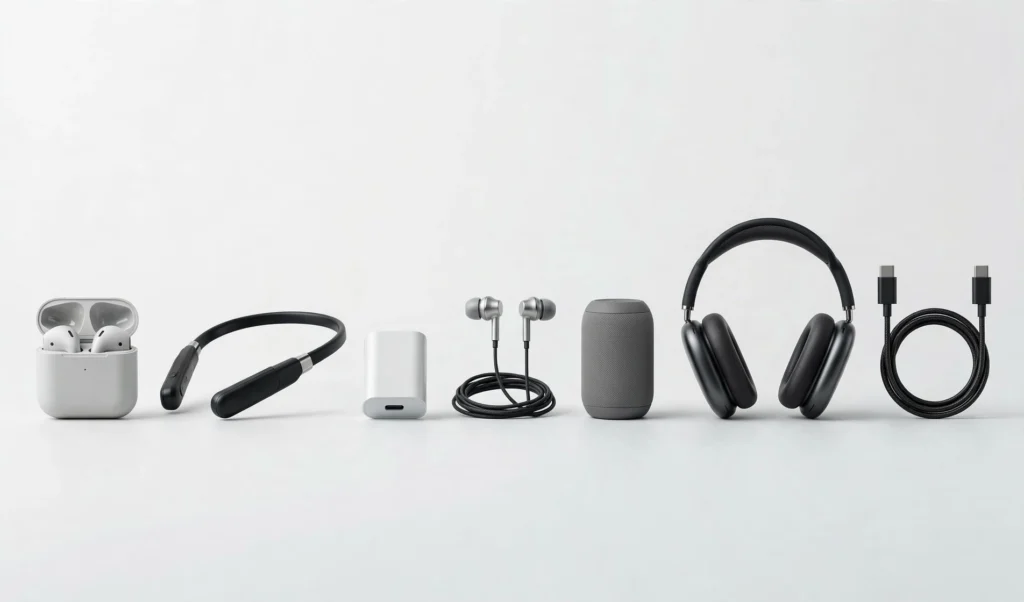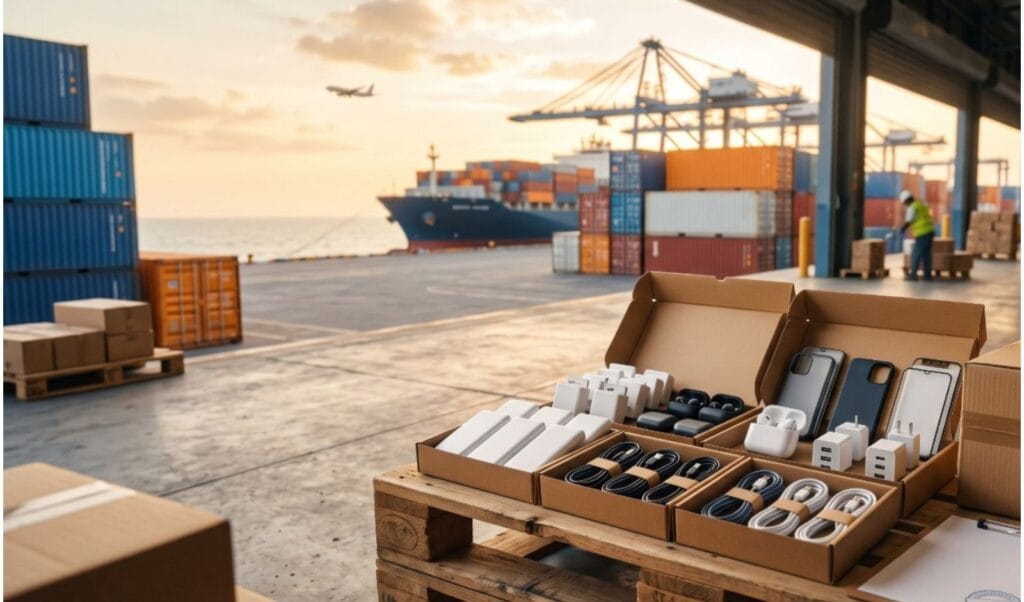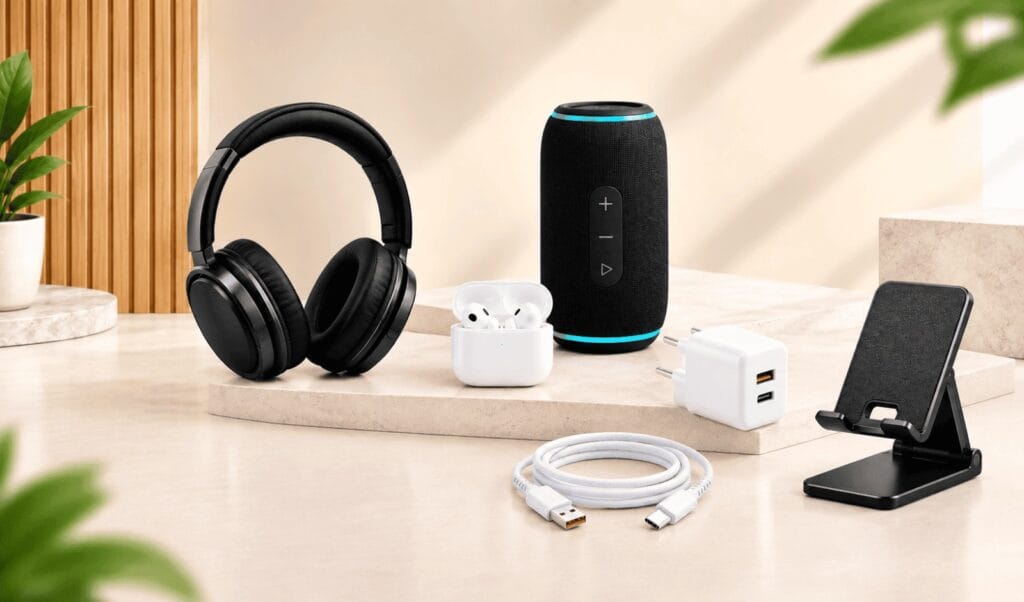
oem

mobile chargers

What Are the Main Components of a Mobile Charger? Complete Guide

A mobile charger may look like a simple device, but it contains several electronic components that work together to convert electrical power into a safe and usable form for your smartphone, tablet, earbuds, and other devices. Modern chargers are designed to deliver the required voltage and current while protecting both the charger and connected device from electrical problems. Understanding the main components of a mobile charger is useful for consumers, retailers, distributors, and businesses involved in mobile accessories manufacturing and sourcing. In this complete guide, we will explain the major components inside a mobile charger, their functions, safety features, and how they work together. What Is a Mobile Charger? A mobile charger is an electronic power supply that converts electricity from an AC power outlet into regulated DC power suitable for charging electronic devices. A typical wall charger receives AC electricity from a household socket and converts it into a lower, controlled DC output through a series of electronic circuits. For example, a charger may provide outputs such as: 5V standard USB charging 9V fast charging 12V or higher outputs for supported fast-charging protocols USB-C Power Delivery (PD) profiles The actual voltage and current delivered depend on the charger’s design and the charging protocol supported by the connected device. Main Components of a Mobile Charger A modern mobile charger generally contains several important components. The exact design varies according to the charger’s power rating, size, charging technology, and safety requirements. The major components include: AC input section Fuse EMI filter Rectifier Capacitors Switching controller Transformer Secondary-side rectifier Feedback circuit Output filtering components USB-A or USB-C port Protection circuits PCB (Printed Circuit Board) Let’s understand each component in detail. 1. AC Input Section The AC input section is where electrical power enters the charger from the wall socket. Depending on the charger design, this section includes terminals, contacts, and protective components that allow mains electricity to enter the internal circuit safely. The input section is designed to handle the specified mains voltage range and prepare the incoming power for conversion. For chargers intended for different markets, the input specification may vary depending on local electrical standards. 2. Fuse A fuse is an important safety component inside many charger designs. Its primary purpose is to protect the charger from excessive current. If a serious fault causes the current to rise beyond a safe level, the fuse can open the circuit and help prevent further damage. A properly selected fuse can provide protection against conditions such as: Overcurrent Certain internal short circuits Component failures The fuse is therefore an important part of the charger’s overall electrical safety design. 3. EMI Filter EMI stands for Electromagnetic Interference. An EMI filter helps reduce unwanted electrical noise generated by the charger’s switching circuits and can also help prevent external electrical noise from interfering with the charger. Common components used in filtering include: Inductors Common-mode chokes Capacitors Other filtering elements Good EMI filtering helps a charger operate more reliably and supports compliance with applicable electromagnetic compatibility requirements. 4. Rectifier The electricity coming from a household outlet is AC, while the charger’s internal electronic circuits generally require DC. A rectifier converts the incoming AC voltage into DC. A common design uses a bridge rectifier made from diodes. The rectified output is then processed by the charger’s switching circuit. This conversion is one of the first major stages in the charger’s power-conversion process. 5. Capacitors Capacitors are found in several sections of a charger and perform different functions. They can help: Smooth rectified voltage Store electrical energy temporarily Reduce voltage fluctuations Filter high-frequency noise Stabilize output power The primary-side capacitor and output-side capacitors have different roles because they operate in different parts of the circuit. The selection of capacitor type, voltage rating, temperature rating, and capacitance is important for charger reliability. 6. Switching Controller The switching controller is one of the key components in a modern switched-mode charger. Instead of continuously reducing voltage like a traditional linear power supply, a switching charger rapidly switches electrical power through its circuit at high frequency. The switching controller controls this process and helps regulate the amount of energy transferred through the transformer. Modern charger ICs may integrate several functions into a single semiconductor device, helping manufacturers create smaller and more efficient chargers. 7. Transformer The transformer is a critical component in many isolated mobile charger designs. It performs two major functions: Transfers electrical energy from the primary side to the secondary side Provides electrical isolation between the input and output sections High-frequency transformers used in switched-mode chargers can be much smaller than traditional low-frequency transformers. Transformer design depends on factors such as: Output power Switching frequency Core material Winding design Insulation requirements Efficiency targets This is one reason modern fast chargers can be significantly smaller than older charger designs. 8. Secondary-Side Rectifier After energy is transferred through the transformer, the output still needs to be converted and conditioned into the required DC form. A secondary-side rectifier performs this conversion. Depending on the charger’s design, manufacturers may use conventional diodes or more efficient semiconductor solutions such as synchronous rectification. Efficient rectification can help reduce power losses and heat generation. 9. Feedback Circuit A feedback circuit monitors the charger’s output and communicates information back to the control section. Its purpose is to help maintain a stable output under changing load conditions. For example, when the connected device changes its power demand, the charger needs to adjust its switching behavior to maintain the appropriate output. In isolated charger designs, feedback may use components such as an optocoupler to maintain isolation between primary and secondary circuits. 10. Output Filtering Components The output stage commonly contains inductors, capacitors, and other filtering components. These components help smooth the converted DC power and reduce unwanted electrical ripple and noise. Good output filtering is important because the connected smartphone or accessory requires a stable power supply. The quality and design of the output stage can have a significant effect on charger performance. 11. USB-A or USB-C Port The charging

What Are the Main Components of a Mobile Charger? Complete Guide Read More »

oem mobile accessories

OEM Mobile Accessories Packaging: Complete Guide to Custom & Private Label Packaging

In the competitive mobile accessories market, product quality is only one part of building a successful brand. Packaging plays an equally important role in how customers perceive your products. Whether you are launching wireless earbuds, mobile chargers, charging cables, Bluetooth speakers, neckbands, car chargers, or other accessories, professional OEM mobile accessories packaging can help establish a strong and recognizable brand identity. For retailers, distributors, e-commerce sellers, startups, and established brands, custom and private label packaging provides the opportunity to sell products under their own brand name while maintaining a consistent and professional presentation. This complete guide explains OEM packaging, private label packaging, customization options, materials, design considerations, packaging processes, and how to choose the right packaging solution for your mobile accessories business. What Is OEM Mobile Accessories Packaging? OEM mobile accessories packaging refers to packaging developed or customized specifically for products manufactured under an OEM arrangement. Instead of selling a product in generic packaging, businesses can customize elements such as: Brand name and logo Product model name Brand colors Packaging dimensions Product specifications Features and benefits Barcode and QR code Contact information Importer or marketer information Instruction details Warranty information For example, if a business orders wireless earbuds from an OEM manufacturer, the earbuds can carry the buyer’s logo while the retail box can also be designed according to the buyer’s branding. This creates a complete branded product that is ready for distribution or retail sale. What Is Private Label Packaging? Private label packaging allows businesses to sell products manufactured by another company under their own brand identity. The manufacturer handles product manufacturing and packaging according to the buyer’s requirements, while the final product is presented under the buyer’s brand. For example, a company may select an existing Bluetooth speaker model and customize it with its logo, brand colors, packaging design, product information, and barcode. The finished product can then be marketed as part of that company’s own product range. Private label packaging is especially useful for: Mobile accessories brands Startups Retail chains Distributors Wholesalers Importers and exporters E-commerce sellers Corporate gifting companies It allows businesses to enter or expand in the mobile accessories market without developing every product and packaging component independently. OEM Packaging vs Private Label Packaging Although OEM and private label packaging are closely related, there can be differences depending on the level of customization required. OEM packaging can involve extensive customization according to the buyer’s product, branding, specifications, dimensions, and packaging requirements. Private label packaging generally focuses on taking an existing product and presenting it under the buyer’s brand using customized logos, graphics, labels, and retail packaging. Both options can help businesses create a professional branded product line. Why Is Custom Packaging Important for Mobile Accessories? Packaging is often the first physical interaction customers have with a product. A well-designed package can communicate quality before the customer even opens the box. 1. Builds Brand Identity Consistent logo placement, colors, typography, and design make your products easier to recognize. When multiple products follow the same packaging style, they create a unified brand identity. 2. Improves Product Presentation Professional packaging can make even a simple mobile accessory look more premium and retail-ready. This becomes particularly important when products are displayed in stores or photographed for online marketplaces. 3. Protects Products Mobile accessories contain components that can be damaged by impacts, dust, scratches, or improper handling. Appropriate packaging helps protect products during storage and transportation. 4. Supports Retail Sales Good packaging clearly communicates what the product is and its important specifications. Customers should be able to quickly identify information such as product type, compatibility, output, connectivity, or other relevant specifications. 5. Helps Build Customer Trust Professional and consistent packaging can make a new brand appear more established and reliable. Clear specifications, manufacturer information, warranty details, and proper labeling also improve transparency. Types of Custom Packaging for Mobile Accessories Different products require different packaging structures. The right option depends on the product dimensions, positioning, budget, and target market. Folding Carton Boxes Folding cartons are widely used for mobile accessories because they are lightweight, customizable, and suitable for mass production. They can be used for: Charging cables Wired earphones Mobile chargers Car chargers Small mobile accessories The exterior can be customized with branding, specifications, product images, and other required information. Rigid Boxes Rigid boxes provide a more premium presentation and are commonly considered for higher-value products. They are suitable for: Premium wireless earbuds Headphones Bluetooth speakers Corporate gift products Premium accessory collections Their stronger construction can also provide additional product protection. Sliding or Drawer Boxes Drawer-style packaging consists of an outer sleeve and an inner sliding tray. This style creates a premium unboxing experience and works particularly well for earbuds, earphones, cables, and other compact accessories. Hanging Retail Boxes Packaging with a hanging tab is useful for physical retail stores where products are displayed on hooks or racks. It is commonly used for cables, chargers, earphones, adapters, and small accessories. Window Packaging A transparent window allows customers to see the actual product without opening the box. This can be useful when product design, color, or finish is an important selling point. Mobile Accessories That Can Use Custom Packaging OEM and private label packaging can be developed for a wide range of products. Wireless Earbuds Packaging Earbuds packaging can include: Custom logo Product image Model name Bluetooth information Battery specifications Charging information Key features Barcode or QR code Warranty details Premium earbuds can also use rigid or drawer-style packaging for a better unboxing experience. Neckband Packaging Neckband packaging requires enough internal space to hold the neckband securely without excessive bending. Custom inserts can help maintain the correct product position. Bluetooth Speaker Packaging Speaker packaging usually requires stronger materials because speakers can be heavier than smaller accessories. Protective inserts can reduce movement during transportation. Mobile Charger Packaging Packaging for mobile chargers should clearly display relevant specifications such as: Output power Port configuration Input specifications Supported charging technology Compatibility information The internal structure should also keep the charger securely positioned. Charging Cable Packaging

OEM Mobile Accessories Packaging: Complete Guide to Custom & Private Label Packaging Read More »

OEM Product Quality Testing Process

OEM Product Quality Testing Process for Mobile Accessories

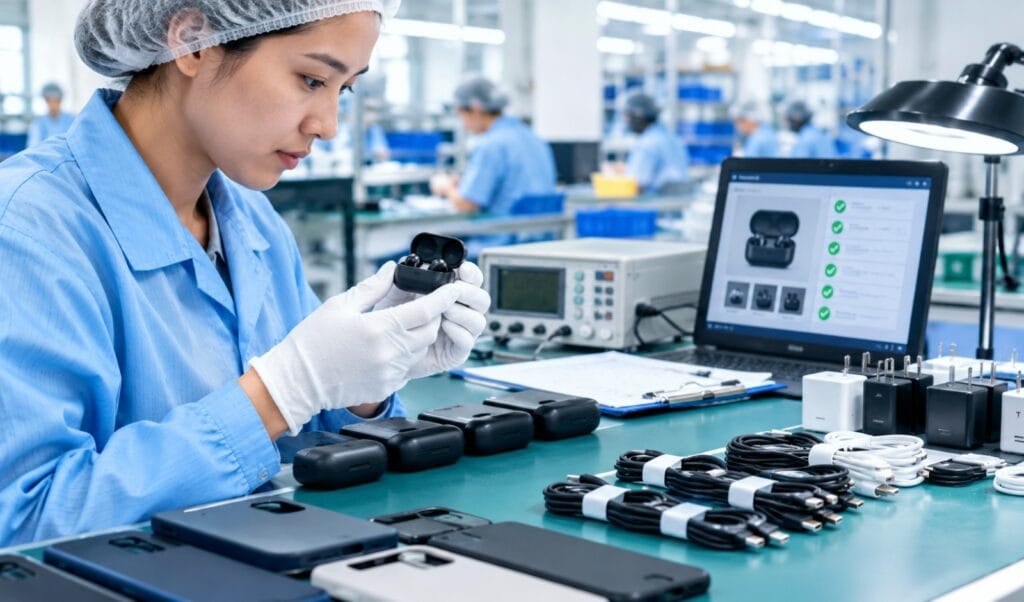
OEM Product Quality Testing Process – Quality is one of the most important factors in OEM mobile accessories manufacturing. Whether a brand is manufacturing wireless earbuds, neckbands, Bluetooth speakers, mobile chargers, charging cables, car chargers, headphones, or wired earphones, every product should go through a structured quality testing process before it reaches the market. For retailers, distributors, e-commerce sellers, startups, and private-label brands, proper product testing helps reduce defects, improve customer satisfaction, protect brand reputation, and maintain consistent product quality. In this guide, we explain the OEM product quality testing process for mobile accessories, from incoming material inspection to final packaging and pre-dispatch checks. What Is Quality Testing in OEM Manufacturing? OEM quality testing is the process of inspecting and testing products at different stages of manufacturing to verify that they meet the required specifications, performance standards, appearance requirements, and packaging guidelines. Instead of checking products only after production is complete, an effective OEM manufacturer performs quality checks throughout the manufacturing process. The exact testing procedure depends on the product category. For example, a mobile charger requires charging performance and electrical safety checks, while wireless earbuds require additional testing for Bluetooth connectivity, battery performance, microphones, speakers, and controls. Why Is Quality Testing Important for Mobile Accessories? Mobile accessories are used regularly and often depend on electrical components, batteries, connectors, cables, and wireless technology. Even a small manufacturing defect can affect the overall user experience. A systematic quality control process can help OEM brands: Reduce defective products Maintain consistent production quality Verify product specifications Improve product reliability Reduce customer complaints and returns Maintain consistency across bulk orders Protect their private-label brand reputation Quality testing becomes particularly important for bulk OEM orders because consistency is required across hundreds or thousands of units. 1. Incoming Material Inspection Quality control begins before the final product is assembled. Components and raw materials used for manufacturing are inspected according to the product requirements. Depending on the accessory, these may include PCB components, batteries, speaker drivers, microphones, charging connectors, cables, plastic housings, buttons, ICs, and packaging materials. The purpose of incoming inspection is to identify unsuitable components before they enter the production process. 2. Visual and Physical Inspection During production, products are checked for visible manufacturing defects and physical inconsistencies. The inspection may cover: Product finishing Body alignment Scratches or marks Connector alignment Button placement Cable finishing Printing quality Logo positioning Product colour Assembly quality For private-label manufacturing, special attention is also given to the accuracy and placement of the customer’s branding. 3. Functional Testing Functional testing verifies whether the product performs according to its intended specifications. Different mobile accessories require different functional tests. Wireless Earbuds and Neckbands Testing may include Bluetooth pairing, left and right audio output, microphone functionality, calling performance, charging, buttons or touch controls, battery operation, and connection stability. Bluetooth Speakers The testing process can include Bluetooth connectivity, speaker output, charging functionality, buttons, microphone functionality where applicable, and basic playback performance. Mobile Chargers Mobile chargers may be tested for output performance, charging functionality, port operation, compatibility, and stability under specified operating conditions. Charging Cables Charging cables can be checked for connector fit, charging performance, continuity, data transfer functionality where supported, and physical construction. Car Chargers Car charger testing may include port functionality, output performance, connector fitting, and charging stability. These checks help identify functional defects before products proceed to final inspection. 4. Charging and Power Output Testing Charging accessories require particular attention to power performance. For mobile chargers, car chargers, power-related accessories, and charging cables, testing can verify whether the product delivers performance according to its defined specifications. Depending on the product, parameters such as voltage, current, charging output, supported charging protocols, and port functionality may be checked using appropriate testing equipment. For products with multiple ports, individual ports may also be tested separately. 5. Battery Testing Battery-powered mobile accessories such as earbuds, neckbands, headphones, and Bluetooth speakers require battery-related checks. Testing may cover: Charging functionality Battery operation Charging indicators Playback performance Standby behaviour Battery consistency Charging case functionality for TWS earbuds Battery performance requirements should be defined according to the selected product specification and OEM configuration. 6. Audio and Microphone Testing Audio products require additional testing because sound and calling performance directly affect the customer’s experience. Earbuds, neckbands, speakers, headphones, and wired earphones may be checked for: Left/right channel operation Speaker output Sound consistency Microphone operation Calling functionality Unwanted noise or distortion Bluetooth audio connectivity The testing criteria can vary depending on the product model and required specifications. 7. Connectivity Testing Wireless mobile accessories generally use Bluetooth connectivity, making connection testing an important part of quality inspection. Products can be tested for initial pairing, reconnection, connection stability, operating controls, and compatibility with suitable test devices. This helps identify connectivity-related issues before bulk products are packed. 8. Durability and Reliability Checks Depending on the product and agreed quality requirements, additional physical or reliability tests may be conducted. Examples include connector insertion checks, cable bending tests, button operation tests, charging-cycle checks, and other product-specific durability evaluations. The exact testing standards and sampling procedures should be agreed upon between the OEM manufacturer and buyer before mass production. 9. Custom Logo and Branding Inspection For OEM and private-label orders, product performance is only one part of quality control. Branding also needs to be checked carefully. The manufacturer should verify: Correct brand logo Logo position Printing clarity Correct product colour Model information Packaging artwork Barcode or labels where required Product and packaging consistency This stage helps prevent branding mistakes from appearing across an entire production batch. 10. Packaging Quality Inspection Once products pass the required functional checks, packaging is inspected. Packaging inspection can include box quality, printing, product placement, accessories included inside the box, labels, manuals, warranty cards, and other agreed packaging components. For private-label brands, the packaging should match the approved artwork and specifications before bulk dispatch. 11. Final Quality Inspection After manufacturing and packaging, a final quality inspection can be performed according to the agreed inspection method or sampling plan. The final inspection may verify

OEM Product Quality Testing Process for Mobile Accessories Read More »

Minimum Order Quantity (MOQ) in OEM Manufacturing

Minimum Order Quantity (MOQ) in OEM Manufacturing

Minimum Order Quantity (MOQ) in OEM Manufacturing – If you are planning to launch your own brand or source customized products from a manufacturer, one of the first terms you will encounter is Minimum Order Quantity (MOQ). MOQ plays an important role in OEM manufacturing because it affects product pricing, customization options, packaging, production costs, and the total investment required for an order. For startups, retailers, distributors, e-commerce sellers, and private label brands, understanding MOQ can help reduce inventory risk and make better purchasing decisions. In this guide, we explain what MOQ means in OEM manufacturing, how it is calculated, why manufacturers require it, and how businesses can negotiate a suitable MOQ. What Is Minimum Order Quantity (MOQ)? MOQ stands for Minimum Order Quantity. It is the minimum number of units a manufacturer is willing to produce or supply in a single order. For example, if an OEM manufacturer has an MOQ of 500 units for a particular product, the buyer generally needs to order at least 500 units to meet the manufacturer’s standard production requirement. MOQ is not necessarily the same for every product. It can vary depending on product type, manufacturing process, materials, customization, packaging, branding, and production setup. In OEM manufacturing, MOQ becomes particularly important because buyers often require their own logo, packaging, specifications, colors, or other customized features. What Does MOQ Mean in OEM Manufacturing? In OEM (Original Equipment Manufacturer) manufacturing, products are manufactured or customized according to a buyer’s requirements. The buyer may request: Custom logo printing Private label branding Custom packaging Different colors Product specifications Model name customization Custom labels User manuals Product accessories Design modifications Each customization can involve additional setup, materials, printing, tooling, or production work. Therefore, an OEM MOQ represents the minimum production volume at which the manufacturer can practically and economically fulfill the customized order. Why Do OEM Manufacturers Have MOQ Requirements? Manufacturers generally cannot run production efficiently for extremely small quantities. Before manufacturing begins, there may be costs associated with raw materials, production-line setup, machinery, labor, printing, packaging, testing, and quality control. For example, producing custom packaging for only a handful of products can be significantly more expensive per unit than producing hundreds or thousands of boxes. MOQ helps manufacturers distribute these fixed production costs across a larger number of units. This is why higher levels of customization can sometimes result in higher MOQ requirements. What Factors Affect MOQ in OEM Manufacturing? There is no universal MOQ that applies to every OEM product. Several factors determine the minimum quantity required. 1. Product Type Different products have different manufacturing processes. For example, the MOQ for a mobile stand may differ from the MOQ for wireless earbuds, Bluetooth speakers, charging cables, or mobile chargers. Products requiring more components or complex assembly can have different production requirements. 2. Level of Customization Simple customization generally requires fewer manufacturing changes. Adding a logo to an existing product may require a lower production commitment than changing the product’s structure, internal components, features, or design. The more customized your product becomes, the more likely additional development or setup requirements will apply. 3. Custom Logo Printing Logo printing may require screen preparation, laser engraving, pad printing, UV printing, or another process depending on the product. Manufacturers may therefore set a minimum quantity for custom branding. 4. Private Label Packaging Custom packaging can have its own MOQ. Even when a manufacturer can provide a relatively small quantity of products, the packaging supplier may require a larger minimum quantity for custom printed boxes. Always ask separately about product MOQ and packaging MOQ. 5. Raw Materials Manufacturers and component suppliers may also have minimum purchasing quantities. If your product requires a specific material, color, component, battery, cable, connector, or chipset, the manufacturer may need to purchase a minimum amount from its upstream supplier. 6. Product Color Standard colors that are already in production may have lower requirements. A completely customized color can require a larger quantity because the manufacturer may need to prepare materials specifically for your order. 7. Product Specifications Changing specifications can affect MOQ. For electronic accessories, changes in battery capacity, charging power, chipset, drivers, connectors, cable length, materials, or other components may change the manufacturer’s sourcing and production requirements. 8. Order Frequency Existing buyers who place regular orders may sometimes receive more flexible terms than first-time customers. A long-term relationship and predictable order volume can make production planning easier for the manufacturer. Different Types of MOQ in OEM Manufacturing When discussing MOQ with an OEM manufacturer, it is useful to understand that there can be multiple minimum quantities within the same project. Product MOQ refers to the minimum number of products you need to order. Logo MOQ refers to the minimum quantity required for customized branding. Packaging MOQ refers to the minimum number of customized boxes or packaging units that must be produced. Color MOQ may apply when you require a specific custom product color. ODM MOQ can apply when significant design or specification changes require a new production setup. Always ask the manufacturer which MOQ applies to each part of your project. OEM MOQ vs ODM MOQ OEM and ODM projects can have different MOQ requirements. With OEM manufacturing, businesses may select an existing product and customize elements such as the logo, packaging, color, or specifications. With ODM manufacturing, more extensive product development or design modifications may be involved. Because ODM projects can require tooling, engineering, prototyping, component sourcing, or new production processes, the minimum order requirement can sometimes be higher. The exact MOQ ultimately depends on the manufacturer and project. MOQ for Private Label Manufacturing Private label manufacturing can be an attractive option for businesses launching a new brand. Instead of developing a completely new product, you may select an existing product and customize its branding and packaging. This can reduce development complexity compared with a fully customized product. However, private label orders can still have separate MOQ requirements for products, logo printing, packaging, and other customization. Businesses should therefore request a complete quotation

Minimum Order Quantity (MOQ) in OEM Manufacturing Read More »

Right OEM Manufacturer in India

How to Choose the Right OEM Manufacturer in India

Right OEM manufacturer in India is one of the most important decisions for any business planning to launch products under its own brand. Whether you are a startup, retailer, distributor, e-commerce seller, importer, exporter, or an established brand, your OEM manufacturing partner directly affects product quality, pricing, delivery timelines, customization, packaging, and ultimately your brand reputation. India has a growing manufacturing ecosystem across electronics, mobile accessories, consumer products, automotive components, electrical products, and many other industries. However, not every manufacturer offers the same production capabilities, quality standards, MOQ, customization options, or after-sales support. This guide explains how to choose an OEM manufacturer in India, what questions to ask, what factors to compare, and which mistakes to avoid before placing a bulk manufacturing order. What Is an OEM Manufacturer? OEM stands for Original Equipment Manufacturer. An OEM manufacturer produces products or components according to another company’s requirements, which can then be sold under that company’s brand. Depending on the manufacturer and product category, OEM services may include product manufacturing, specification customization, logo printing, private label branding, packaging customization, bulk production, quality testing, and product development. For businesses that do not want to establish their own manufacturing facility, working with an OEM partner can provide a practical way to introduce branded products to the market. Why Choosing the Right OEM Manufacturer Matters Your manufacturer is not simply a supplier. The manufacturer becomes an important part of your supply chain. If product quality is inconsistent, customers associate the problem with your brand rather than the factory producing the product. Similarly, production delays can affect product launches, inventory availability, distributor relationships, marketplace performance, and customer satisfaction. A reliable OEM manufacturing partner can help you maintain consistent product quality, control costs, develop customized products, manage production timelines, and scale manufacturing as your business grows. Step 1: Define Your Product Requirements Before searching for an OEM manufacturer in India, clearly define what you want to manufacture. Prepare basic requirements such as product category, specifications, materials, features, colors, branding requirements, packaging, estimated quantity, target price range, and expected delivery timeline. For example, if you are looking for an OEM mobile accessories manufacturer, specify whether you need wireless earbuds, Bluetooth speakers, chargers, charging cables, neckbands, wired earphones, headphones, car chargers, or mobile stands. The clearer your requirements are, the easier it becomes to compare manufacturers accurately. Step 2: Check the Manufacturer’s Product Specialization Not every factory is suitable for every product. A manufacturer specializing in charging products may have different equipment, testing processes, technical expertise, and supply chains compared with a manufacturer specializing in audio products. Look for manufacturers with relevant experience in your required product category. For mobile accessories, this could include expertise in categories such as: Wireless earbuds Bluetooth speakers Neckbands Headphones Wired earphones Mobile chargers Car chargers Charging cables Multi charging cables Mobile stands Relevant specialization can make product development and quality control easier. Step 3: Evaluate Manufacturing Capabilities Before finalizing an OEM supplier, understand what the company can actually manufacture or customize. Ask about production capacity, available machinery, assembly capabilities, quality-control procedures, packaging facilities, customization processes, and monthly production capacity. You should also understand which operations are completed internally and which are outsourced. This information can help you evaluate whether the manufacturer can support your current order quantity as well as future growth. Step 4: Ask About OEM and ODM Services OEM and ODM are related but different manufacturing models. OEM manufacturing generally focuses on producing products according to the buyer’s specifications or branding requirements. ODM manufacturing can involve greater product design and development support. If you only need an existing product with your logo and customized packaging, an OEM or private label solution may be sufficient. If you want significant changes in design, features, specifications, materials, or functionality, discuss ODM capabilities with the manufacturer. Choosing the appropriate manufacturing model can save both time and development costs. Step 5: Check Custom Branding Options Branding is especially important when you plan to sell products under your own name. Ask whether the manufacturer provides custom logo printing on the product itself. Depending on the product and manufacturing process, branding options may include logo printing, engraving, model-name printing, custom colors, labels, and other brand-specific elements. Request samples or photographs of previous branding work to understand the expected printing quality. Your logo should remain consistent and clearly visible across your product range. Step 6: Check Private Label Packaging Options Packaging plays an important role in product presentation and customer experience. A professional OEM manufacturer may provide private label packaging options such as custom boxes, product inserts, labels, manuals, stickers, barcodes, and other packaging elements. Ask about minimum quantities for customized packaging because packaging MOQ may differ from the product MOQ. Also confirm who will prepare the packaging artwork and what file formats or dimensions are required. Step 7: Understand the Minimum Order Quantity MOQ stands for Minimum Order Quantity, which is the minimum quantity a manufacturer is willing to produce for a particular order. MOQ can depend on the product, customization level, raw materials, packaging requirements, and production process. A simple logo customization on an existing product may have a different MOQ from a completely customized ODM product. For startups and new brands, flexible MOQ can be particularly useful because it allows initial market testing without excessive inventory investment. However, the lowest MOQ should not be the only reason for selecting a manufacturer. Step 8: Always Request Product Samples Samples are one of the best ways to evaluate an OEM manufacturer’s capabilities. Never judge product quality only through photographs, videos, catalogues, or quotations. Order samples and test them yourself. For electronic products, check build quality, functionality, performance, materials, durability, packaging, and overall finishing. For audio accessories, evaluate sound quality, microphone quality, connectivity, battery performance, controls, and comfort. For charging products, evaluate charging performance, connector quality, compatibility, construction, and heat management. Sample testing can identify potential problems before you commit to bulk manufacturing. Step 9: Compare Product Quality, Not Just Price One of the most common mistakes businesses

How to Choose the Right OEM Manufacturer in India Read More »

own mobile accessories brand

How to Start Your Own Mobile Accessories Brand in India

Own mobile accessories brand in India can be a promising business opportunity due to the growing use of smartphones and increasing demand for products such as wireless earbuds, Bluetooth speakers, mobile chargers, charging cables, neckbands, headphones, car chargers, and mobile stands. You do not necessarily need to establish your own factory to enter this market. With the help of an OEM mobile accessories manufacturer in India, you can source products, customize specifications, add your logo, create private label packaging, and launch products under your own brand name. This guide explains how to start a mobile accessories business in India, from choosing products and finding an OEM manufacturer to branding, packaging, pricing, sales, and marketing. Why Start a Mobile Accessories Brand in India? India has a large smartphone user base, and mobile accessories are frequently purchased alongside or after smartphones. Accessories such as charging cables, chargers, earbuds, speakers, stands, and car chargers can also generate repeat purchases because customers replace, upgrade, or buy additional accessories for different devices. The mobile accessories market also provides businesses with multiple sales opportunities. A brand can sell products through its own website, online marketplaces, retailers, distributors, wholesalers, corporate buyers, and other B2B channels. Instead of investing heavily in manufacturing infrastructure, startups and sellers can use OEM, ODM, and private label mobile accessories manufacturing to enter the market with comparatively lower initial infrastructure requirements. What Is an OEM Mobile Accessories Business? OEM stands for Original Equipment Manufacturer. In an OEM business model, a manufacturer produces mobile accessories that another company can sell under its own brand. For example, if you want to launch wireless earbuds under your own brand, an OEM manufacturer may provide the product while allowing customization such as your logo, packaging, product specifications, colors, and other options depending on manufacturing capabilities. This allows retailers, distributors, startups, and e-commerce sellers to focus more on branding, marketing, distribution, and customer acquisition. OEM vs ODM vs Private Label Understanding these three terms is important before contacting a manufacturer. OEM manufacturing generally involves manufacturing products according to the buyer’s required specifications and branding requirements. ODM manufacturing provides greater involvement in product design or development. Businesses looking for more customized products may consider ODM solutions. Private label manufacturing allows businesses to sell products manufactured by another company under their own brand name, usually with customized logos and packaging. The right option depends on your budget, order quantity, required customization, product specifications, and long-term business strategy. Step 1: Research the Mobile Accessories Market Before selecting products, understand what your target customers actually need. Research popular products, competitor pricing, customer reviews, product features, market gaps, packaging styles, and sales channels. You should also identify your target customers. Your business may focus on budget consumers, premium buyers, retailers, distributors, corporate customers, online shoppers, or a specific niche. Good market research helps you avoid selecting products purely based on trends and instead build a product range around actual customer demand. Step 2: Choose the Right Mobile Accessories One of the most important decisions is deciding which products to launch first. Popular mobile accessories categories include: Wireless earbuds Bluetooth speakers Neckbands Wired earphones Wireless headphones Wall chargers Fast charging adapters Car chargers USB charging cables Type-C charging cables Multi charging cables Mobile stands Bike phone holders Laptop stands A new brand does not need to launch every category simultaneously. Starting with approximately 3–5 carefully selected products can make inventory, marketing, and quality control easier to manage. Once these products start generating demand, you can gradually expand your product portfolio. Step 3: Find an OEM Mobile Accessories Manufacturer in India Finding a reliable OEM mobile accessories manufacturer is one of the most important parts of starting your brand. Do not select a manufacturer based only on the lowest quotation. Evaluate their product quality, customization capabilities, production capacity, communication, quality-control process, and delivery reliability. Before finalizing an OEM supplier, ask about: Minimum Order Quantity (MOQ) Product specifications OEM and ODM availability Custom logo printing Private label packaging Sample availability Bulk pricing Production timelines Quality testing Warranty policies Packaging customization Shipping and logistics support Clear communication at this stage can prevent problems during bulk production. Step 4: Order Product Samples Never place a large bulk order without properly evaluating samples. Samples allow you to check whether the product matches your expected quality and target price segment. For audio products such as earbuds, neckbands, speakers, and headphones, evaluate sound quality, microphone performance, Bluetooth connectivity, battery performance, build quality, controls, and charging. For chargers and cables, evaluate charging performance, connector quality, compatibility, cable durability, heat management, and overall construction. Mobile stands and holders should be tested for stability, grip, material quality, adjustment mechanisms, and durability. Sample testing gives you an opportunity to request changes before bulk manufacturing begins. Step 5: Create Your Brand Identity Your brand should be easy for customers to recognize and remember. Start by selecting a unique brand name and creating a professional logo. You should also decide your brand colors, typography, packaging style, and overall visual identity. Think about how you want customers to perceive your brand. Do you want to build an affordable everyday accessories brand, a premium technology brand, a youth-focused brand, or a performance-oriented accessories brand? Having a clear positioning makes future marketing decisions much easier. Step 6: Customize Products With Your Logo One of the biggest advantages of private label mobile accessories is the ability to sell products under your own identity. Depending on the manufacturer and product, customization may include: Brand logo printing Product color Model name Packaging design Product specifications User manual Labels Inner packaging Accessories included in the box Consistent branding across your products and packaging can make even a new business look more professional. Step 7: Design Custom Private Label Packaging Packaging is more than just a box protecting your product. It is also an important branding and sales tool. Your packaging should clearly communicate the product name, major features, specifications, compatibility information, and brand identity. For retail and e-commerce products, attractive packaging can improve

How to Start Your Own Mobile Accessories Brand in India Read More »

oem wired earphones

OEM Wired Earphones Manufacturer in India: Private Label Manufacturing Guide

oem wired earphones – Despite the rapid growth of wireless audio products, wired earphones continue to have a strong market because of their simple connectivity, affordable pricing, reliable audio performance, and zero charging requirements. They are widely used with smartphones, laptops, tablets, computers, gaming devices, and other compatible electronics. For mobile accessories brands, distributors, wholesalers, retailers, e-commerce sellers, and startups, wired earphones can be an important product category with opportunities across budget and premium segments. Working with an OEM wired earphones manufacturer in India allows businesses to develop customized wired earphones under their own brand. From custom logo printing and packaging to connector type, microphone, cable design, driver specifications, colors, and product finishing, OEM and private label manufacturing can help businesses create a differentiated audio accessories range. This guide explains OEM wired earphone manufacturing, private labeling, customization options, production processes, quality considerations, and how to choose the right manufacturing partner in India. What Are OEM Wired Earphones? OEM stands for Original Equipment Manufacturer. In OEM manufacturing, a manufacturer produces wired earphones according to agreed specifications for another company. The finished product can then be sold under that company’s own brand. Depending on manufacturing capabilities and order requirements, OEM customization may include: Custom brand logo Private label packaging Earphone color Cable material Cable length Driver specifications Microphone In-line controls Connector type Product finishing OEM manufacturing allows businesses to launch their own branded wired earphones without establishing an independent manufacturing facility. What Is Private Label Wired Earphone Manufacturing? Private label manufacturing generally involves selecting an available wired earphone model and customizing it with your own branding and packaging. For example, a business may select an existing earphone design and add: Its own brand logo Custom retail box Product model name Specifications Barcode QR code Contact information Brand colors Private labeling can be particularly useful for businesses that want to enter the mobile accessories market without developing an entirely new product from the beginning. Why Choose a Wired Earphones Manufacturer in India? India has a large market for smartphones, computers, mobile accessories, and audio products. Although wireless earbuds and neckbands have grown rapidly, wired earphones continue to serve customers looking for simple and affordable audio solutions. Partnering with an OEM manufacturer can provide several benefits. Build Your Own Brand Private labeling allows you to sell products under your own identity rather than relying entirely on third-party brands. Your logo can be incorporated into the product and packaging to create a consistent brand presence. Custom Product Options Depending on the manufacturer, businesses can select different drivers, connectors, microphones, cable materials, colors, and designs. Bulk Manufacturing OEM manufacturing can support bulk requirements for wholesalers, distributors, retailers, corporate buyers, and online sellers. Expand Your Audio Accessories Range Businesses already selling earbuds, neckbands, Bluetooth speakers, or headphones can add wired earphones to create a more complete audio portfolio. Types of OEM Wired Earphones A private label wired earphone range can include different products for different devices and customer segments. 3.5mm Wired Earphones The traditional 3.5mm audio connector remains useful for many laptops, computers, audio devices, older smartphones, and other compatible electronics. These earphones can be positioned as affordable everyday audio accessories. Type-C Wired Earphones As more smartphones remove the traditional 3.5mm headphone jack, Type-C wired earphones have become increasingly relevant. They connect directly to compatible USB Type-C ports and can be used with supported smartphones, tablets, laptops, and other devices. Compatibility should always be confirmed because USB-C audio support can vary between devices. Wired Earphones with Microphone Built-in microphones allow customers to use their earphones for: Phone calls Online meetings Voice chats Video calls Gaming communication This makes microphone-equipped earphones suitable for everyday personal and professional use. Wired Earphones with In-Line Controls In-line controls can provide convenient access to supported functions such as: Play/pause Call handling Volume adjustment Microphone Available functions depend on the earphone design and connected device. Customization Options for OEM Wired Earphones Customization is one of the main reasons businesses choose OEM and private label manufacturing. 1. Custom Logo Branding Your brand logo can be placed on suitable areas of the earphones or packaging. Depending on the product design, branding may be applied to: Earbud housing Microphone/control unit Connector housing Cable component Packaging Logo printing methods depend on the product material, design, quantity, and manufacturing process. 2. Custom Packaging Packaging plays an important role in product presentation. Private label packaging options may include: Printed retail boxes Hanging boxes Pouches Window boxes Inner trays Custom inserts Packaging can include your brand logo, product specifications, features, barcode, QR code, contact information, and other required details. 3. Connector Selection Businesses can select connector types according to their target market. Common options include: 3.5mm audio jack USB Type-C Connector availability depends on the selected model and manufacturing capabilities. 4. Driver Options The driver is an important component affecting the overall audio characteristics of an earphone. Depending on available models, OEM earphones may use different driver sizes such as: 8mm 10mm 13mm Driver size alone does not determine sound quality. Tuning, housing design, materials, and other acoustic factors also affect audio performance. 5. Microphone Customization Businesses targeting calling, online meetings, gaming, or everyday communication can select earphones with an integrated microphone. Microphone performance should be evaluated during product sampling and testing. 6. Cable Length Different cable lengths can be offered depending on customer requirements. Common options may include: 1 meter 1.2 meter 1.5 meter Custom lengths may also be possible depending on the model and MOQ. 7. Cable Material The cable affects durability, flexibility, appearance, and overall product positioning. Options can include: PVC Cable: Practical and cost-effective for mass-market products. TPE Cable: Flexible and commonly used in mobile audio accessories. Braided Cable: Can provide a more premium appearance and improved resistance to everyday wear depending on construction quality. 8. Custom Colors Brands may select colors according to their identity and target market. Common options include: Black White Red Blue Grey Additional custom colors may be available depending on MOQ and manufacturing requirements. OEM Wired Earphones Manufacturing Process A

OEM Wired Earphones Manufacturer in India: Private Label Manufacturing Guide Read More »

oem car charger

OEM Car Charger Manufacturer in India | OEM & ODM

The demand for fast and reliable charging solutions is increasing as smartphones, tablets, navigation devices, and other electronic products become essential for everyday travel. For drivers who spend significant time on the road, a reliable car charger provides a convenient way to keep devices charged while travelling. For mobile accessories brands, distributors, wholesalers, retailers, startups, and e-commerce sellers, car chargers can be an important addition to a charging accessories portfolio. Working with an OEM car charger manufacturer in India allows businesses to develop customized car chargers under their own brand. Depending on manufacturing capabilities and order requirements, businesses can customize charging output, port configuration, product design, logo, color, packaging, and other specifications. This complete OEM & ODM guide explains car charger manufacturing, private labeling, customization options, fast-charging configurations, quality control, production processes, and important factors to consider when choosing a manufacturing partner. What Is an OEM Car Charger? OEM stands for Original Equipment Manufacturer. In OEM manufacturing, a manufacturer produces car chargers according to specifications agreed with another business. The finished products can then be marketed and sold under that company’s own brand. OEM manufacturing can include customization such as: Custom logo printing Private label branding Custom packaging Charging output selection USB and Type-C port configurations Product colors Housing design Packaging artwork Product labels and specifications This allows businesses to launch branded car charging products without establishing their own manufacturing facility. What Is an ODM Car Charger? ODM stands for Original Design Manufacturer. ODM manufacturing can provide a greater level of product development support. Depending on the project and manufacturer’s capabilities, an ODM partner may assist with product design, technical specifications, materials, appearance, functionality, testing, and production. ODM can be useful for businesses that want a more differentiated product rather than simply adding their branding to an existing car charger model. OEM vs ODM Car Charger Manufacturing Although OEM and ODM are often used together, they represent different approaches. OEM Car Chargers OEM is generally suitable when a business already knows what type of product it wants and needs a manufacturing partner to produce it according to agreed specifications. OEM customization may include: Brand logo Product color Charging specifications Port configuration Packaging Labels Product finishing ODM Car Chargers ODM may be more suitable when additional product design or development is required. Depending on project requirements, ODM manufacturing can involve: Product concept development Housing design Port arrangement Charging configuration Material selection Product appearance Prototype development Packaging development The best option depends on your budget, order volume, required level of customization, and product strategy. Why Choose a Car Charger Manufacturer in India? India has a large market for smartphones, mobile accessories, automobiles, and charging products. This creates opportunities for businesses looking to establish or expand their own mobile accessories brands. Choosing an OEM or ODM car charger manufacturer in India can provide several benefits. Private Label Branding Your brand identity can be added to the product and packaging, helping you build your own product portfolio instead of selling only generic accessories. Custom Product Specifications Businesses can choose different charging outputs, ports, materials, colors, and designs depending on manufacturing capabilities. Bulk Manufacturing OEM manufacturing enables businesses to source car chargers in larger quantities for retail, wholesale, distribution, corporate supply, and e-commerce channels. Product Range Expansion Brands already selling wall chargers, cables, earbuds, speakers, mobile stands, or other mobile accessories can add car chargers to create a broader product portfolio. Local Business Communication Working with an Indian manufacturing partner can simplify communication regarding product specifications, samples, packaging, production requirements, and dispatch for businesses operating in the Indian market. Types of OEM Car Chargers Car chargers are available in multiple configurations. The right product depends on your target customer, price segment, charging requirements, and device compatibility. USB Car Charger USB-A car chargers remain useful for customers who already own traditional USB charging cables. These chargers can be positioned as practical everyday charging accessories. Type-C Car Charger As more devices adopt USB Type-C, Type-C car chargers have become increasingly important. Depending on the supported specifications, Type-C ports can provide convenient charging for compatible smartphones, tablets, power banks, and other devices. Dual-Port Car Charger Dual-port car chargers allow users to connect two compatible devices at the same time. Common configurations may include: Dual USB USB + Type-C Dual Type-C The exact charging output available when multiple ports are used depends on the charger’s internal design and specifications. Fast Charging Car Charger Fast charging car chargers are designed to provide higher charging performance when used with compatible devices and cables. Charging performance depends on several factors, including: Charger output Device compatibility Cable capability Supported charging protocol Number of connected devices Brands should clearly specify supported charging standards and outputs rather than relying only on broad “fast charging” claims. Popular Car Charger Power Options Different customers require different levels of charging performance. OEM and ODM product portfolios can therefore include multiple power categories. 38W Car Charger A 38W car charger can be suitable for everyday charging applications depending on its port configuration and supported charging standards. It can be positioned for customers who want convenient multi-device charging without moving into the highest-power category. 45W Car Charger A 45W car charger can provide higher charging capacity for compatible smartphones and other supported devices. The actual output available to each device depends on the charger configuration and charging protocol. 65W Car Charger A 65W car charger can be positioned as a higher-power charging solution for compatible devices. Depending on its technical design, it may support smartphones, tablets, power banks, and selected USB-C devices requiring higher charging power. Always confirm actual port-level and combined output specifications with the manufacturer. Customization Options for OEM Car Chargers One of the main benefits of OEM and ODM manufacturing is the ability to create products according to your brand requirements. 1. Custom Logo Printing Your brand logo can be applied to suitable areas of the car charger housing. Depending on the product and production method, branding options may include: Logo printing Laser marking Engraving Other

OEM Car Charger Manufacturer in India | OEM & ODM Read More »

oem data cable

OEM Data Cable Manufacturer in India: Complete Private Label Guide

OEM Data Cable – The demand for reliable and fast-charging data cables is growing rapidly as smartphones, tablets, laptops, earbuds, power banks, and other electronic devices become an essential part of everyday life. For mobile accessory brands, distributors, retailers, e-commerce sellers, and startups, data cables represent a high-demand product category with strong repeat-purchase potential. Working with an OEM data cable manufacturer in India allows businesses to launch customized charging and data cables under their own brand. From custom logo printing and packaging to cable length, connector type, charging capacity, materials, and bulk production, OEM and private label manufacturing provide businesses with greater control over their products. This complete guide explains OEM data cable manufacturing, private labeling, available cable types, customization options, manufacturing processes, quality considerations, and how to choose the right manufacturing partner in India. What Is OEM Data Cable Manufacturing? OEM stands for Original Equipment Manufacturer. In OEM data cable manufacturing, a manufacturer produces cables according to the specifications and branding requirements of another company. Instead of establishing your own manufacturing infrastructure, you can work with an experienced OEM manufacturer to develop products under your brand. Depending on the project, businesses can customize: Brand logo Cable length Cable material Connector type Charging capacity Data transfer capability Cable color Connector housing Retail packaging Product labeling This makes OEM manufacturing suitable for companies looking to build or expand their own mobile accessories brand. Why Choose an OEM Data Cable Manufacturer in India? India has a large and growing mobile accessories market. Increasing smartphone usage, adoption of fast-charging devices, and demand for reliable replacement accessories continue to create opportunities for data cable brands. Partnering with an OEM data cable manufacturer can provide several advantages. 1. Private Label Branding Private labeling allows you to sell data cables using your own brand identity. Your logo and branding can be applied to the cable, connector housing, packaging, labels, and other suitable areas depending on the product design. This helps businesses establish a recognizable product line instead of selling completely generic accessories. 2. Multiple Cable Options An OEM manufacturer can provide different cable configurations for various devices and charging requirements. Common options include: USB-A to Type-C cable Type-C to Type-C cable USB-A to Lightning-compatible cable Type-C to Lightning-compatible cable Micro USB cable Multi charging cable Businesses can select products according to their target customers and market segment. Fast Charging Data Cables Fast charging has become an important consideration when customers purchase a charging cable. Modern smartphones and other devices may support different charging technologies and power levels. Therefore, brands can develop cable ranges designed for different charging requirements. Depending on the cable construction, connector configuration, device compatibility, and manufacturing specifications, OEM cable options may include different power ratings such as: 30W Data Cables Suitable for many everyday smartphone and mobile-device charging applications where compatible devices and chargers support the required charging standard. 65W Data Cables A useful option for compatible smartphones, tablets, power banks, and selected USB-C devices requiring higher charging capacity. 100W Type-C to Type-C Cables Designed for compatible high-power USB-C charging applications. Depending on the cable specification and supported charging protocol, these cables can be suitable for selected laptops, tablets, smartphones, and other USB-C devices. Actual charging speed depends on the cable, charger, device, supported charging protocol, and overall system compatibility. Data Cable Customization Options One of the biggest advantages of OEM manufacturing is product customization. Custom Logo Printing Your brand logo can be printed, engraved, or otherwise applied to suitable parts of the cable or connector housing, depending on the design and production method. Custom branding gives the product a professional private label appearance. Custom Packaging Packaging plays an important role in retail presentation. OEM packaging options may include: Printed retail boxes Hanging boxes Pouches Blister packaging Custom inserts Barcode labels Product specification labels Brand information QR codes Packaging can be designed according to your brand identity and sales channel. Cable Length Different customers have different usage requirements. Common lengths may include: 0.5 meter 1 meter 1.2 meter 1.5 meter 2 meter Custom lengths may also be possible depending on production requirements and order quantity. Cable Material Cable construction has a major impact on durability, appearance, flexibility, and cost. Options can include: PVC Cables: Cost-effective and suitable for mass-market product ranges. TPE Cables: Flexible and commonly used for charging accessories. Braided Cables: Designed to provide improved durability and a more premium appearance. The right material depends on your target price, product positioning, and customer requirements. Custom Colors Brands can also select cable and connector colors based on their product identity. Popular choices include black, white, grey, red, blue, and other custom colors subject to manufacturing availability and MOQ. OEM vs Private Label Data Cables OEM and private label are closely related, but the level of customization can differ. Private Label Data Cables Private label manufacturing generally involves selecting an existing product model and adding your own branding and packaging. This can be an efficient option for businesses looking for: Faster product launches Lower development requirements Established product configurations Custom branding Custom packaging OEM Data Cables OEM manufacturing may provide greater flexibility in product specifications. Depending on order quantity and manufacturing capability, businesses may customize cable materials, length, connectors, power specifications, colors, packaging, and other product characteristics. For a new brand, private labeling can be a practical starting point. Businesses requiring more differentiated products can explore deeper OEM customization. OEM Data Cable Manufacturing Process A structured production process helps maintain product consistency and ensures that branding requirements are correctly implemented. Step 1: Requirement Discussion The project starts by identifying your product requirements. This may include: Cable type Connector combination Required charging specification Cable length Material Quantity Target market Branding requirements Packaging requirements Step 2: Product Selection & Specification A suitable cable model and specification are selected based on your requirements. At this stage, technical specifications, available customization, pricing, and MOQ can be discussed. Step 3: Branding & Packaging Your logo, product information, and packaging design are prepared according to your brand guidelines. This

OEM Data Cable Manufacturer in India: Complete Private Label Guide Read More »

mobile accessories

Mobile Accessories Manufacturers in Delhi: Complete B2B Supplier Guide

Oem Mobile Accessories – Delhi has emerged as one of India’s largest manufacturing and wholesale hubs for mobile accessories. With the increasing demand for smartphones, tablets, smartwatches, wireless earbuds, and charging devices, businesses across India are searching for reliable mobile accessories manufacturers in Delhi to source high-quality products at competitive prices. From startups launching new brands to wholesalers, distributors, retailers, and e-commerce sellers, Delhi offers a wide range of OEM and private label manufacturing solutions that help businesses grow quickly without investing in their own production facilities. The city’s strong supply chain, experienced manufacturers, and easy access to transportation make it one of the preferred destinations for sourcing mobile accessories in bulk. Whether you are looking for chargers, cables, power banks, wireless earbuds, neckbands, Bluetooth speakers, mobile holders, or other smartphone accessories, Delhi provides a complete B2B ecosystem for businesses of every size. Why Delhi is a Leading Hub for Mobile Accessories Manufacturing Delhi has become a preferred manufacturing destination due to its strategic location, skilled workforce, modern production facilities, and extensive distribution network. Manufacturers in Delhi supply products across India while also serving export markets. Businesses benefit from competitive pricing, faster production, lower logistics costs, and access to a wide range of mobile accessory products under one roof. Most manufacturers provide OEM and private label services, allowing businesses to launch products under their own brand name while maintaining complete control over packaging, product design, and branding. Products Manufactured by Mobile Accessories Manufacturers in Delhi Professional manufacturers produce a comprehensive range of mobile accessories suitable for wholesale, retail, corporate gifting, and e-commerce businesses. Popular products include: Mobile Chargers Fast Chargers USB Type-C Chargers GaN Chargers Charging Cables Data Cables Power Banks Wireless Earbuds Bluetooth Neckbands Wireless Headphones Bluetooth Speakers Smart Watches Mobile Holders Car Chargers Wireless Chargers Laptop Chargers USB Hubs Phone Stands Screen Protectors Mobile Covers Many manufacturers regularly introduce new products to meet changing consumer demands and market trends. OEM Mobile Accessories Manufacturing OEM manufacturing enables businesses to create products under their own brand without owning a manufacturing facility. The manufacturer handles production, quality testing, and assembly, while the client focuses on branding, marketing, and sales. OEM manufacturing is ideal for businesses that want to launch premium-quality products quickly while reducing investment costs and operational risks. Private Label Mobile Accessories Private label manufacturing allows businesses to fully customize products according to their branding requirements. Customization options typically include: Custom Logo Printing Retail Packaging Design Product Color Selection User Manuals Warranty Cards Barcode Labels QR Code Printing Custom Product Labels Master Carton Branding Accessory Kits Brand Documentation Private label products help businesses build customer trust and create a unique identity in the competitive mobile accessories market. Benefits of Buying Directly from Manufacturers Purchasing directly from manufacturers offers several advantages over sourcing from intermediaries. Businesses benefit from: Competitive Factory Pricing Consistent Product Quality Latest Product Designs Bulk Order Discounts Faster Delivery Reliable Inventory Custom Branding OEM Support Private Label Services Warranty Assistance Long-Term Business Relationships These benefits help improve profitability while ensuring consistent product availability. Industries Served by Mobile Accessories Manufacturers Manufacturers in Delhi supply products to a wide range of industries. These include: Mobile Accessory Brands Electronics Retailers Wholesale Dealers Distributors Importers Exporters Corporate Gift Suppliers E-commerce Sellers Educational Institutions Government Organizations Telecom Companies Promotional Merchandise Businesses This broad customer base demonstrates the manufacturing capabilities and scalability of Delhi’s mobile accessories industry. Quality Standards Followed by Manufacturers Reliable manufacturers maintain strict quality control procedures throughout the production process. Products are tested for: Charging Performance Power Efficiency Safety Standards Short Circuit Protection Over Voltage Protection Over Current Protection Temperature Resistance Drop Testing Cable Durability Battery Performance Compatibility Testing Packaging Inspection Many manufacturers also comply with industry certifications such as BIS, CE, FCC, RoHS, and ISO standards to ensure product safety and reliability. Manufacturing Process Professional manufacturers follow a structured production process to maintain consistent quality. The process generally includes: Product Design Component Procurement PCB Assembly SMT Production Product Assembly Quality Inspection Performance Testing Logo Printing Packaging Final Inspection Dispatch Each stage undergoes multiple quality checks before the products are shipped to customers. Factors to Consider When Choosing a Mobile Accessories Manufacturer Selecting the right manufacturing partner is essential for long-term business success. Before placing an order, consider the following factors: Manufacturing Experience Product Range OEM Capability Private Label Services Production Capacity Quality Certifications Minimum Order Quantity Customization Options Delivery Timeline Pricing Warranty Support Customer Reviews Technical Support A reliable manufacturer should be able to deliver consistent quality while meeting your business requirements and timelines. Advantages of OEM and Private Label Manufacturing OEM and private label manufacturing help businesses establish a strong brand presence without investing heavily in infrastructure. Some major advantages include: Lower Initial Investment Professional Manufacturing Custom Branding Scalable Production Reduced Operational Costs Faster Product Launch Improved Brand Recognition Higher Profit Margins Long-Term Business Growth These benefits make OEM manufacturing an excellent choice for startups, wholesalers, distributors, and established brands. Growing Demand for Mobile Accessories in India India’s smartphone user base continues to expand rapidly, driving demand for quality mobile accessories. Consumers increasingly seek fast chargers, Type-C cables, wireless earbuds, Bluetooth speakers, power banks, and premium accessories that offer better performance and durability. The rise of e-commerce platforms, organized retail, and digital payments has further accelerated demand across urban and rural markets. Businesses that partner with experienced mobile accessories manufacturers in Delhi can take advantage of these growing opportunities by offering reliable, branded products that meet evolving customer expectations. Why Partner with a Delhi-Based Manufacturer Delhi provides businesses with access to advanced manufacturing facilities, experienced technical teams, efficient logistics, and competitive pricing. Manufacturers offer flexible production capacities, OEM and private label services, strict quality control, and fast turnaround times, making them ideal partners for businesses looking to expand their product portfolio. Whether you are launching a new brand or scaling an existing one, working with a trusted manufacturer in Delhi ensures consistent quality, reliable supply, and long-term business growth. Conclusion Mobile accessories manufacturers in Delhi play a vital

Mobile Accessories Manufacturers in Delhi: Complete B2B Supplier Guide Read More »

Call Now Button