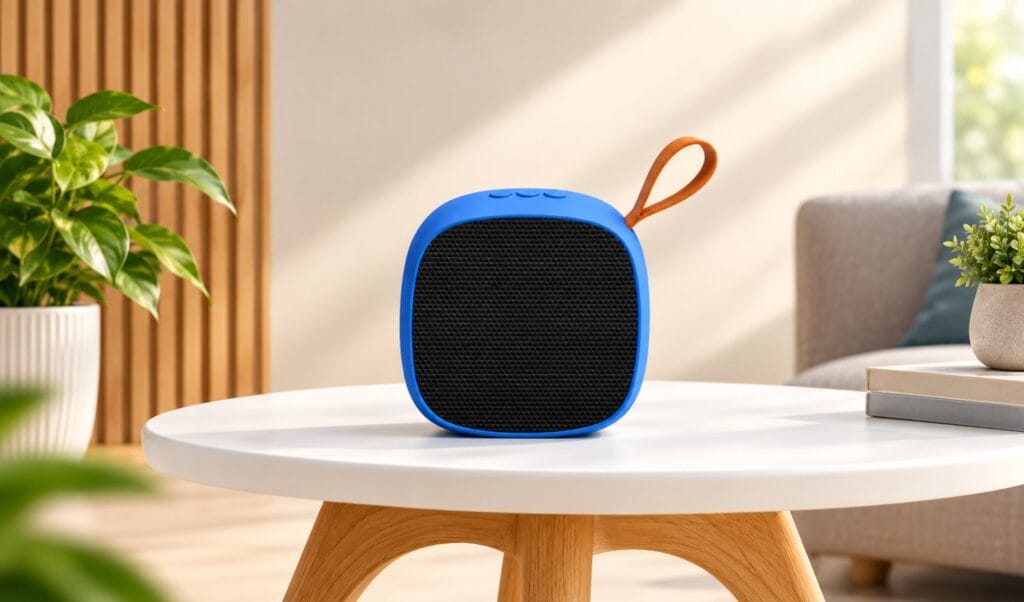
For businesses planning to launch their own audio brand, OEM Bluetooth speaker manufacturing provides an opportunity to develop products under their own brand name without setting up an entire manufacturing facility.
With OEM manufacturing, businesses can customize different aspects of a Bluetooth speaker, including branding, colors, packaging, specifications, accessories, and product presentation. However, before starting production, it is important to understand the customization options, MOQ, sampling process, quality requirements, and private label workflow.
This guide explains how OEM Bluetooth speaker manufacturing works and what businesses should consider before placing a bulk order.
What Is an OEM Bluetooth Speaker?
OEM Bluetooth speakers are wireless speakers manufactured by a supplier or manufacturer according to the requirements of another brand.
Instead of selling the manufacturer’s product under its original branding, a business can develop a product under its own brand identity.
Depending on the manufacturer and project requirements, customization can include:
- Brand logo
- Product color
- Product finish
- Packaging
- Retail box
- User manual
- Product specifications
- Accessories
- Labels and branding elements
- Product name
This allows businesses to create a consistent product identity across their audio accessories range.
OEM vs Private Label Bluetooth Speakers
OEM and private label are related but can involve different levels of customization.
OEM Bluetooth Speaker
OEM manufacturing generally involves producing a product according to specific requirements from a brand. These requirements may involve modifications to the product, specifications, design, components, or packaging.
Private Label Bluetooth Speaker
Private labeling generally means using an existing product design and selling it under your own brand name, often with customized branding and packaging.
For example, a manufacturer may already have a Bluetooth speaker model available. A brand can select that model, add its own logo and packaging, and sell it under its own brand.
The exact level of customization depends on the manufacturer’s capabilities and the agreed production requirements.
Why Choose OEM Bluetooth Speaker Manufacturing?
OEM manufacturing can be useful for businesses that want to enter the wireless audio market without developing an entire manufacturing operation.
Some potential benefits include:
Brand Ownership
Your Bluetooth speaker can be sold under your own brand name and identity.
Product Customization
You can select or discuss product features, colors, finishes, packaging, and other requirements according to the project.
Flexible Product Positioning
OEM products can be developed for different price segments, from affordable portable speakers to more premium audio products.
Scalable Production
Once a product is finalized and approved, businesses can place larger production orders as demand grows.
Professional Packaging
Customized packaging helps create a consistent brand experience across different products.
Bluetooth Speaker Customization Options
One of the biggest advantages of OEM manufacturing is the ability to customize different parts of the product.
However, not every manufacturer offers the same options, so customization should be discussed before finalizing the project.
1. Logo and Brand Customization
The most common customization is adding your brand logo to the speaker.
Depending on the product and manufacturing process, branding may be applied through methods such as:
- Logo printing
- Laser engraving
- Embossing
- Branding on speaker panels
- Logo placement on controls or housing
The available method depends on the material and design of the speaker.
2. Product Color
Color customization can help your product match your brand identity.
Common options may include:
- Black
- White
- Blue
- Red
- Green
- Grey
- Custom shades
For custom colors, the manufacturer may require a higher MOQ depending on production requirements.
3. Product Finish
The exterior finish can affect the appearance and perceived quality of the speaker.
Possible finishes may include:
- Matte
- Glossy
- Textured
- Metallic-style finishes
- Fabric-covered designs
- Rubberized surfaces
The appropriate finish depends on the product design, target market, and manufacturing process.
4. Packaging Customization
Customized packaging is an important part of private label Bluetooth speaker manufacturing.
A brand can develop packaging that includes:
- Brand logo
- Product name
- Product images
- Feature highlights
- Technical specifications
- Barcode
- User instructions
- Warranty information
- Required product information
Professional packaging can help create a consistent appearance across your entire product range.
5. User Manual and Documentation
Brands can also customize documentation included with the product.
This may include:
- User manual
- Quick-start guide
- Warranty card
- Safety instructions
- Brand information
The documentation should provide customers with clear information about product operation and applicable warranty terms.
6. Product Features
Depending on the manufacturer’s available models and engineering capabilities, different Bluetooth speaker features may be available.
These can include:
- Bluetooth connectivity
- USB charging
- Type-C charging
- TWS functionality
- RGB lighting
- Built-in microphone
- Hands-free calling
- FM functionality
- USB playback
- Memory card support
- Different output power levels
- Portable designs
- Water-resistant construction
Not every feature is available on every model. The manufacturer should confirm the actual specification before production.
7. Accessories
The accessories included inside the box can also be customized depending on the project.
For example, the package may include:
- Charging cable
- User manual
- Warranty card
- Carrying strap
- Other model-specific accessories
The final package contents should be clearly confirmed before mass production.
What Is MOQ in OEM Bluetooth Speaker Manufacturing?
MOQ stands for Minimum Order Quantity.
It refers to the minimum number of units a manufacturer requires for a production order.
For example, a manufacturer may establish different MOQs for:
- Standard products
- Customized colors
- Custom packaging
- Custom logos
- New product designs
- Different specifications
There is no universal MOQ for all OEM Bluetooth speakers. It depends on the manufacturer, product model, customization level, production process, and order requirements.
Why Does Customization Affect MOQ?
Customization can require additional production preparation.
For example, if you want:
- A custom product color
- New packaging
- Custom printing
- Special components
- Modified product design
the manufacturer may need additional setup, materials, tooling, or production planning.
As a result, customized products can have different MOQ requirements from standard models.
Questions to Ask About MOQ
Before placing an order, ask the manufacturer:
- What is the MOQ for the selected model?
- Is there a different MOQ for custom colors?
- Is logo printing included?
- What is the MOQ for custom packaging?
- Can multiple colors be included in one order?
- Can multiple models be combined?
- What is the sample quantity?
- What happens if the required quantity is below the standard MOQ?
Getting these details in writing can help you plan your initial investment.
OEM Bluetooth Speaker Private Label Process
The private label process generally involves several stages.
Step 1: Define Your Brand Requirements
Start by defining what you want to create.
Determine:
- Brand name
- Target customer
- Target price range
- Product category
- Preferred speaker size
- Desired features
- Preferred colors
- Packaging requirements
- Expected order quantity
Having clear requirements makes communication with the manufacturer easier.
Step 2: Select the Bluetooth Speaker Model
The manufacturer may provide available models or product options.
Compare the models based on:
- Design
- Size
- Output
- Battery capacity
- Features
- Materials
- Connectivity
- Price
- Customization possibilities
Select a model that matches your target market rather than simply choosing the product with the highest specification.
Step 3: Discuss Customization
After selecting a model, discuss your customization requirements.
This may include:
- Logo placement
- Logo size
- Product color
- Packaging
- Product labeling
- Accessories
- User manual
- Product specifications
The manufacturer should confirm which modifications are technically possible and how they affect cost and MOQ.
Step 4: Request a Sample
Before placing a bulk order, request a sample.
A sample allows you to evaluate:
- Product design
- Build quality
- Sound performance
- Bluetooth connectivity
- Battery performance
- Buttons
- Charging
- LED or RGB functions
- Packaging
- Overall finishing
Test the speaker under realistic usage conditions.
Step 5: Approve the Product
After testing the sample, provide feedback.
If changes are required, communicate them clearly.
The final product specifications should be documented before mass production.
Step 6: Finalize Packaging
Prepare the final packaging artwork.
Make sure the packaging information is checked carefully before printing.
Review:
- Brand name
- Product name
- Specifications
- Features
- Product images
- Contact information
- Warranty information
- Barcode
- Required labels
A packaging error can be expensive to correct after printing, so proofreading is important.
Step 7: Confirm Pricing and MOQ
Once the product and packaging are finalized, confirm the commercial details.
Discuss:
- Unit price
- MOQ
- Packaging cost
- Customization cost
- Sample cost
- Production timeline
- Shipping arrangements
- Payment terms
Make sure you understand the complete cost structure before approving production.
Step 8: Mass Production
After approval, the manufacturer begins production according to the finalized specifications.
Depending on the order, the manufacturing process may involve:
- Component preparation
- Product assembly
- Branding
- Software or firmware configuration where applicable
- Testing
- Packaging
- Quality inspection
- Final packing
Production time can vary depending on the product, order quantity, customization, and manufacturer capacity.
Step 9: Quality Inspection
Quality control is an important stage before shipment.
The manufacturer or an independent inspection team can check:
- Product appearance
- Logo placement
- Speaker functionality
- Bluetooth connectivity
- Charging
- Battery performance
- Buttons
- Accessories
- Packaging
- Quantity
A defined quality checklist can help ensure that the production batch matches the approved sample.
Step 10: Packaging and Delivery
After final inspection, products are packed for shipment.
The delivery process depends on factors such as:
- Order quantity
- Shipping method
- Destination
- Packaging requirements
- Logistics provider
Discuss the expected delivery schedule before production begins.
How Much Does an OEM Bluetooth Speaker Cost?
The cost of an OEM Bluetooth speaker varies considerably depending on the product and customization requirements.
Factors affecting the price include:
- Speaker size
- Components
- Battery capacity
- Output power
- Bluetooth technology
- Materials
- Product design
- Features
- Packaging
- Logo customization
- Order quantity
- Custom development requirements
Larger orders may have different unit economics than smaller orders, but the exact pricing should be obtained from the manufacturer for the specific model and specification.
Instead of comparing only the unit price, calculate your complete landed cost.
What Is Included in the Landed Cost?
Your total cost may include:
Product Cost + Customization + Packaging + Shipping + Taxes/Duties + Warehousing + Other Business Costs
This gives you a more realistic picture of your investment and expected selling margin.
How to Choose an OEM Bluetooth Speaker Manufacturer
Choosing the right manufacturing partner is just as important as selecting the product.
Consider the following factors:
Manufacturing Experience
Look for a manufacturer with experience producing the type of Bluetooth speaker you need.
Product Quality
Evaluate samples and production consistency.
Customization Capability
Confirm whether the manufacturer can meet your branding, packaging, color, and specification requirements.
MOQ
Make sure the manufacturer’s MOQ fits your business plan.
Quality Control
Ask how products are tested during and after production.
Communication
Clear communication is important when discussing specifications and customization.
Documentation
Ask for relevant product documentation and compliance information applicable to your target market.
Production Capacity
If you expect your business to grow, make sure the manufacturer can support larger future orders.
OEM Bluetooth Speaker Quality Checklist
Before approving your product, consider checking:
| Category | What to Check |
|---|---|
| Design | Appearance and finishing |
| Audio | Sound performance |
| Bluetooth | Pairing and connection stability |
| Battery | Capacity and performance |
| Charging | Charging interface and reliability |
| Controls | Buttons and functionality |
| Microphone | Calling performance, if applicable |
| Lighting | LED/RGB operation, if included |
| Materials | Housing and component quality |
| Packaging | Printing, protection and presentation |
| Branding | Logo position and quality |
| Accessories | Correct items included |
| Documentation | Manual and warranty information |
Common Mistakes in Private Label Bluetooth Speaker Manufacturing
Ordering Without a Sample
Skipping sample testing can create quality problems during mass production.
Choosing Only the Cheapest Manufacturer
A lower quotation does not automatically mean better overall value.
Not Defining Specifications
Unclear specifications can lead to misunderstandings during production.
Ignoring Packaging Quality
Poor packaging can negatively affect product presentation and transportation protection.
Ordering Too Much Inventory
New brands should carefully plan inventory according to expected demand and available capital.
Not Checking Product Documentation
Make sure applicable safety, regulatory, and compliance requirements are addressed for your target market.
Changing Specifications After Production Begins
Late changes can increase cost and delay production.
Tips for Launching Your Own Bluetooth Speaker Brand
If you are launching a new private label audio brand, consider starting with one or two carefully selected speaker models.
Focus on:
- Consistent branding
- Reliable product quality
- Useful features
- Attractive packaging
- Competitive positioning
- Clear product information
- Proper quality testing
- Customer support
Once your initial products gain market acceptance, you can expand into additional Bluetooth speaker models and related audio accessories such as wireless earbuds and neckbands.
Frequently Asked Questions
What is the MOQ for OEM Bluetooth speakers?
MOQ varies by manufacturer and product. Standard models may have different MOQs from products requiring custom colors, packaging, components, or design changes. Always confirm the MOQ for your specific project.
Can I put my own logo on a Bluetooth speaker?
Yes, private label and OEM manufacturers can offer branding options such as logo printing or engraving depending on the product and manufacturing process.
Can I customize the Bluetooth speaker color?
Many manufacturers offer color customization, but availability and MOQ can vary by model.
Can I customize the packaging?
Yes. Custom retail boxes, manuals, warranty cards, labels, and other packaging elements can often be developed for private label products.
Should I order a sample before bulk production?
Yes. Testing a sample before mass production allows you to evaluate product quality and confirm whether the specifications meet your requirements.
How long does OEM Bluetooth speaker production take?
Production time varies depending on the model, order quantity, customization, packaging, and manufacturer’s production schedule. Confirm the estimated production timeline before placing your order.
Can a new brand start with private label Bluetooth speakers?
Yes. Private labeling can allow a new brand to launch using an existing product model with its own branding and packaging, subject to the manufacturer’s MOQ and customization requirements.
Conclusion
OEM Bluetooth speaker manufacturing can provide businesses with a practical way to develop and launch their own wireless audio products. From logo customization and product colors to packaging and selected features, businesses can create products that fit their brand identity and target market.
However, successful private labeling requires more than simply adding a logo. Product selection, sample testing, quality control, MOQ, pricing, packaging, compliance, and manufacturer communication all play important roles in the process.
Before placing a bulk order, clearly define your requirements, test the product, confirm the final specifications, understand the complete cost, and establish quality expectations with your OEM manufacturer.
With a structured approach, businesses can develop a Bluetooth speaker product line that is aligned with their brand, customers, and long-term business strategy.
Planning Your Own Mobile Accessories Brand
Get an OEM manufacturing quote based on your product, quantity, specifications, branding and packaging requirements.Discuss your requirements for earbuds, neckbands, Bluetooth speakers, chargers, cables, headphones, car chargers and mobile stands.