Private Label vs White Label Mobile Accessories: What's the Difference?
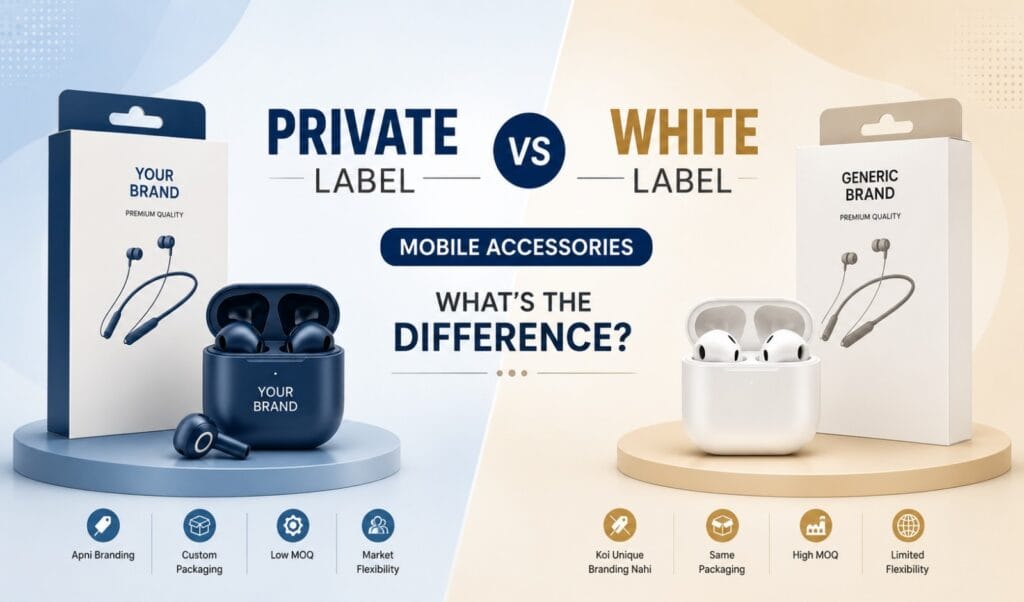
Private Label vs White Label Mobile Accessories: The mobile accessories market is expanding rapidly as smartphone adoption continues to grow worldwide. Products like wireless earbuds, Bluetooth speakers, chargers, charging cables, neckbands, mobile holders, power banks, and headphones have become everyday essentials. This growing demand has created excellent opportunities for retailers, distributors, wholesalers, importers, exporters, startups, and e-commerce sellers to launch their own mobile accessories brands.
However, one of the biggest questions faced by new businesses is whether they should choose Private Label or White Label manufacturing. While these terms are often used interchangeably, they are not the same. Both business models allow you to sell products under your own brand name, but they differ significantly in terms of customization, exclusivity, branding, product development, investment, and long-term business strategy.
Choosing the right manufacturing model is an important business decision because it directly affects your product quality, customer experience, brand recognition, pricing strategy, and profit margins. If you understand how Private Label and White Label manufacturing work, you can select the option that best aligns with your business goals and budget.
In this guide, we’ll explain the differences between Private Label and White Label mobile accessories, their advantages and disadvantages, and help you decide which model is the right choice for your brand.
What is Private Label Mobile Accessories?
Private Label manufacturing refers to products that are manufactured specifically for one brand. Although the manufacturer produces the product, the buyer owns the branding and can customize various aspects of the product according to their requirements.
With Private Label manufacturing, businesses can customize:
- Product design
- Product colour
- Logo printing
- Packaging
- User manuals
- Accessories
- Product specifications
- Branding elements
Since the products are developed specifically for one company, competitors cannot sell the exact same branded product.
Examples of Private Label Products
- Wireless Earbuds
- Bluetooth Speakers
- Neckbands
- Mobile Chargers
- Data Cables
- Mobile Holders
- Power Banks
- Headphones
Advantages of Private Label
Strong Brand Identity
Customers recognize your products through your own branding, helping build long-term trust.
Higher Profit Margins
Exclusive products allow businesses to charge premium prices.
Complete Customization
Businesses have complete control over product appearance and branding.
Better Customer Loyalty
Unique products encourage repeat purchases.
Competitive Advantage
Since competitors cannot sell identical products under the same branding, your business stands out.
Disadvantages of Private Label
- Higher initial investment
- Larger minimum order quantity (MOQ)
- Longer production time
- Product development requires planning
- More involvement in design and approval
What is White Label Mobile Accessories?
White Label manufacturing involves ready-made products produced by a manufacturer that multiple businesses can purchase and sell under their own brand names.
The product itself remains unchanged, while only the logo or packaging is customized.
White Label products are ideal for businesses that want to enter the market quickly without investing in product development.
Advantages of White Label
Faster Market Entry
Products are already developed and production can begin immediately.
Lower Investment
Suitable for startups with limited budgets.
Smaller MOQ
Manufacturers often offer lower minimum order quantities.
Reduced Risk
Businesses can test the market before investing heavily.
Quick Branding
Only logo printing and packaging need customization.
Disadvantages of White Label
- Limited product customization
- Similar products may be sold by multiple brands
- Lower product exclusivity
- Greater competition
- Limited opportunity for product innovation
Private Label vs White Label: Key Differences
| Feature | Private Label | White Label |
|---|---|---|
| Product Design | Fully Customizable | Ready-made |
| Branding | Complete Branding Control | Basic Branding |
| Logo Printing | Yes | Yes |
| Packaging | Fully Customizable | Limited Options |
| Product Exclusivity | Exclusive | Shared Products |
| Investment | Higher | Lower |
| Time to Market | Longer | Faster |
| MOQ | Usually Higher | Usually Lower |
| Competition | Lower | Higher |
| Profit Potential | Higher | Moderate |
Which Model is Better for Startups?
For startups entering the mobile accessories business, White Label manufacturing is often the preferred option because it requires lower investment, quicker production, and reduced business risk. It allows entrepreneurs to launch products quickly, test customer demand, and establish their brand before making larger investments.
Once the business gains market traction and builds a customer base, transitioning to Private Label manufacturing can help create exclusive products, strengthen brand recognition, and improve profitability.
Which Model is Better for Established Brands?
Established businesses usually benefit more from Private Label manufacturing. Since they already have a customer base and market presence, investing in customized products helps them differentiate from competitors, increase brand value, and achieve higher profit margins.
Private Label manufacturing also provides greater flexibility to introduce innovative features, premium packaging, and unique product designs that strengthen customer loyalty.
Factors to Consider Before Choosing
Before deciding between Private Label and White Label manufacturing, consider the following factors:
- Business budget
- Target audience
- Expected sales volume
- Branding objectives
- Product customization requirements
- Production timelines
- Marketing strategy
- Long-term business goals
Answering these questions will help determine which manufacturing model best fits your business.
When Should You Choose Private Label?
Private Label is ideal if you:
- Want to build a long-term brand
- Need exclusive products
- Prefer custom packaging and design
- Want higher profit margins
- Have sufficient investment
- Plan to scale your business
When Should You Choose White Label?
White Label is ideal if you:
- Are launching a new business
- Want to enter the market quickly
- Have a limited budget
- Need smaller order quantities
- Want to test product demand
- Prefer faster production
Final Thoughts
Both Private Label and White Label manufacturing offer excellent opportunities in the growing mobile accessories industry. The right choice depends on your business objectives, investment capacity, and branding strategy.
If your goal is to establish a unique, premium brand with exclusive products and long-term market recognition, Private Label manufacturing is the better option. Although it requires more investment and planning, it provides greater control, stronger brand identity, and higher profit potential.
If you’re looking for a cost-effective and faster way to launch your business, White Label manufacturing is an excellent starting point. It allows you to introduce products under your own brand with minimal risk and lower upfront costs, making it ideal for startups and businesses testing the market.
Many successful mobile accessory brands begin with White Label products to build experience and customer trust before moving to Private Label manufacturing as they grow. By understanding the strengths of both models, you can make an informed decision that supports your long-term business success.
Whether you’re a startup, retailer, distributor, or e-commerce seller, choosing the right manufacturing model is the first step toward building a successful mobile accessories brand.
Planning Your Own Mobile Accessories Brand
Get an OEM manufacturing quote based on your product, quantity, specifications, branding and packaging requirements.Discuss your requirements for earbuds, neckbands, Bluetooth speakers, chargers, cables, headphones, car chargers and mobile stands.