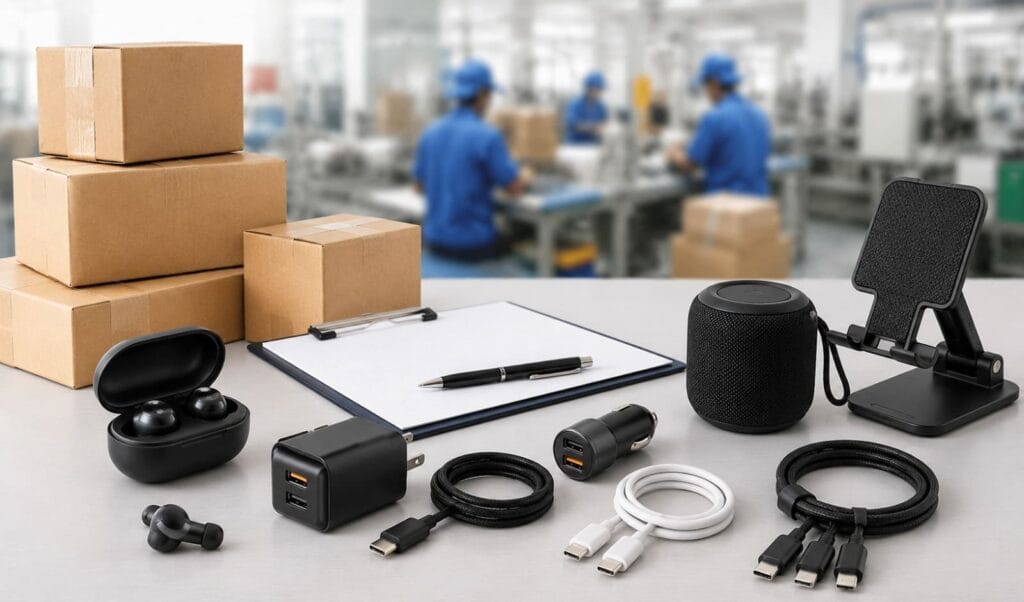
Minimum Order Quantity (MOQ) in OEM Manufacturing – If you are planning to launch your own brand or source customized products from a manufacturer, one of the first terms you will encounter is Minimum Order Quantity (MOQ). MOQ plays an important role in OEM manufacturing because it affects product pricing, customization options, packaging, production costs, and the total investment required for an order.
For startups, retailers, distributors, e-commerce sellers, and private label brands, understanding MOQ can help reduce inventory risk and make better purchasing decisions. In this guide, we explain what MOQ means in OEM manufacturing, how it is calculated, why manufacturers require it, and how businesses can negotiate a suitable MOQ.
What Is Minimum Order Quantity (MOQ)?
MOQ stands for Minimum Order Quantity. It is the minimum number of units a manufacturer is willing to produce or supply in a single order.
For example, if an OEM manufacturer has an MOQ of 500 units for a particular product, the buyer generally needs to order at least 500 units to meet the manufacturer’s standard production requirement.
MOQ is not necessarily the same for every product. It can vary depending on product type, manufacturing process, materials, customization, packaging, branding, and production setup.
In OEM manufacturing, MOQ becomes particularly important because buyers often require their own logo, packaging, specifications, colors, or other customized features.
What Does MOQ Mean in OEM Manufacturing?
In OEM (Original Equipment Manufacturer) manufacturing, products are manufactured or customized according to a buyer’s requirements.
The buyer may request:
- Custom logo printing
- Private label branding
- Custom packaging
- Different colors
- Product specifications
- Model name customization
- Custom labels
- User manuals
- Product accessories
- Design modifications
Each customization can involve additional setup, materials, printing, tooling, or production work.
Therefore, an OEM MOQ represents the minimum production volume at which the manufacturer can practically and economically fulfill the customized order.
Why Do OEM Manufacturers Have MOQ Requirements?
Manufacturers generally cannot run production efficiently for extremely small quantities.
Before manufacturing begins, there may be costs associated with raw materials, production-line setup, machinery, labor, printing, packaging, testing, and quality control.
For example, producing custom packaging for only a handful of products can be significantly more expensive per unit than producing hundreds or thousands of boxes.
MOQ helps manufacturers distribute these fixed production costs across a larger number of units.
This is why higher levels of customization can sometimes result in higher MOQ requirements.
What Factors Affect MOQ in OEM Manufacturing?
There is no universal MOQ that applies to every OEM product. Several factors determine the minimum quantity required.
1. Product Type
Different products have different manufacturing processes.
For example, the MOQ for a mobile stand may differ from the MOQ for wireless earbuds, Bluetooth speakers, charging cables, or mobile chargers.
Products requiring more components or complex assembly can have different production requirements.
2. Level of Customization
Simple customization generally requires fewer manufacturing changes.
Adding a logo to an existing product may require a lower production commitment than changing the product’s structure, internal components, features, or design.
The more customized your product becomes, the more likely additional development or setup requirements will apply.
3. Custom Logo Printing
Logo printing may require screen preparation, laser engraving, pad printing, UV printing, or another process depending on the product.
Manufacturers may therefore set a minimum quantity for custom branding.
4. Private Label Packaging
Custom packaging can have its own MOQ.
Even when a manufacturer can provide a relatively small quantity of products, the packaging supplier may require a larger minimum quantity for custom printed boxes.
Always ask separately about product MOQ and packaging MOQ.
5. Raw Materials
Manufacturers and component suppliers may also have minimum purchasing quantities.
If your product requires a specific material, color, component, battery, cable, connector, or chipset, the manufacturer may need to purchase a minimum amount from its upstream supplier.
6. Product Color
Standard colors that are already in production may have lower requirements.
A completely customized color can require a larger quantity because the manufacturer may need to prepare materials specifically for your order.
7. Product Specifications
Changing specifications can affect MOQ.
For electronic accessories, changes in battery capacity, charging power, chipset, drivers, connectors, cable length, materials, or other components may change the manufacturer’s sourcing and production requirements.
8. Order Frequency
Existing buyers who place regular orders may sometimes receive more flexible terms than first-time customers.
A long-term relationship and predictable order volume can make production planning easier for the manufacturer.
Different Types of MOQ in OEM Manufacturing
When discussing MOQ with an OEM manufacturer, it is useful to understand that there can be multiple minimum quantities within the same project.
Product MOQ refers to the minimum number of products you need to order.
Logo MOQ refers to the minimum quantity required for customized branding.
Packaging MOQ refers to the minimum number of customized boxes or packaging units that must be produced.
Color MOQ may apply when you require a specific custom product color.
ODM MOQ can apply when significant design or specification changes require a new production setup.
Always ask the manufacturer which MOQ applies to each part of your project.
OEM MOQ vs ODM MOQ
OEM and ODM projects can have different MOQ requirements.
With OEM manufacturing, businesses may select an existing product and customize elements such as the logo, packaging, color, or specifications.
With ODM manufacturing, more extensive product development or design modifications may be involved.
Because ODM projects can require tooling, engineering, prototyping, component sourcing, or new production processes, the minimum order requirement can sometimes be higher.
The exact MOQ ultimately depends on the manufacturer and project.
MOQ for Private Label Manufacturing
Private label manufacturing can be an attractive option for businesses launching a new brand.
Instead of developing a completely new product, you may select an existing product and customize its branding and packaging.
This can reduce development complexity compared with a fully customized product.
However, private label orders can still have separate MOQ requirements for products, logo printing, packaging, and other customization.
Businesses should therefore request a complete quotation before calculating their initial investment.
MOQ in OEM Mobile Accessories Manufacturing
MOQ is especially important when launching a mobile accessories brand because different product categories can have very different manufacturing requirements.
An OEM mobile accessories manufacturer may offer products such as:
- Wireless earbuds
- Bluetooth speakers
- Neckbands
- Headphones
- Wired earphones
- Mobile chargers
- Car chargers
- Charging cables
- Multi charging cables
- Mobile stands
The MOQ for each category can differ depending on the selected model and required customization.
For example, choosing an existing charging cable and adding your logo may involve different requirements from developing customized wireless earbuds with specific battery, chipset, sound, and packaging requirements.
Therefore, businesses should avoid assuming that one MOQ applies to an entire mobile accessories catalogue.
Is Low MOQ Better for Startups?
A low MOQ OEM manufacturer can be useful for startups because it reduces the amount of capital tied up in inventory.
Instead of purchasing a very large quantity of an untested product, businesses can begin with a smaller production run, evaluate customer response, and increase quantities when demand becomes clearer.
Potential advantages of lower MOQ include reduced initial investment, lower inventory risk, easier product testing, greater flexibility, and the ability to test multiple products.
However, low MOQ can also mean a higher per-unit price.
Businesses should compare total costs rather than selecting a manufacturer only because it offers the smallest MOQ.
Advantages of Higher Order Quantities
Larger orders can sometimes provide better economics.
Depending on the manufacturer and product, higher quantities may provide:
- Lower per-unit pricing
- Better customization possibilities
- More packaging options
- Improved production efficiency
- Better negotiation opportunities
- More predictable inventory availability
However, ordering more products only to achieve a lower unit price can be risky if demand has not been validated.
The cheapest unit cost is not always the best business decision.
How MOQ Affects Product Pricing
MOQ and unit pricing are often connected.
Suppose a manufacturer has fixed setup costs for branding and production. If those costs are distributed across 100 units, the cost per product will be higher than when the same setup costs are distributed across 1,000 units.
This is one reason manufacturers often provide quantity-based pricing.
For example, a quotation may provide separate pricing for different order volumes rather than one fixed unit price.
When comparing quotations, request pricing for multiple quantities so you can understand how increasing your order affects the unit cost.
How to Calculate the Right MOQ for Your Business
The manufacturer’s minimum quantity is only one part of the decision.
You should also determine the maximum quantity your business can reasonably sell and finance.
Consider your available budget, expected monthly sales, selling price, product cost, marketing expenses, storage capacity, product lifecycle, warranty requirements, and inventory turnover.
For example, purchasing 5,000 units may provide an attractive factory price, but it may not make sense if you expect to sell only 200 units per month.
Your ideal order quantity should balance manufacturing cost with inventory risk.
How to Negotiate MOQ With an OEM Manufacturer
MOQ is not always completely fixed.
Depending on the product and manufacturer, there may be ways to make the initial order more manageable.
Choose an Existing Product
Selecting a product that is already being manufactured may reduce setup requirements compared with developing a completely new model.
Reduce Customization
If your budget is limited, start with essential customization such as logo branding rather than changing multiple product specifications.
Use Standard Colors
Choosing an existing color can sometimes avoid additional material or production requirements.
Simplify Packaging
Premium customized packaging can increase minimum quantities. A simpler packaging solution may be more practical for an initial order.
Discuss Future Orders
If you expect repeat purchases, explain your long-term requirements to the manufacturer.
A manufacturer may be more willing to discuss flexible terms when there is realistic potential for recurring business.
Start With a Trial Order
Ask whether the manufacturer can support a smaller initial production run for market testing.
Once sales are validated, you can increase quantities for subsequent orders.
Questions to Ask About MOQ Before Ordering
Before confirming your OEM order, ask the manufacturer:
- What is the MOQ for this product?
- Is MOQ different for custom branding?
- What is the MOQ for custom packaging?
- Is there a separate MOQ for each color?
- Does specification customization change the MOQ?
- What is the price at different quantities?
- Can I place a smaller trial order?
- Does MOQ change for repeat orders?
- Are there any setup or printing charges?
- Can multiple models be combined to meet MOQ?
These questions can help you understand the actual investment required before placing an order.
Common MOQ Mistakes to Avoid
One common mistake is choosing a large order simply because the manufacturer offers a lower unit price.
Unsold inventory can cost significantly more than the savings achieved through bulk pricing.
Another mistake is assuming that product MOQ includes custom packaging. Product and packaging minimums can be different.
Businesses should also avoid confirming an order without testing samples, calculating total costs, and estimating realistic demand.
Your objective should not be to achieve the lowest possible MOQ or lowest possible unit price. It should be to choose an order quantity that supports healthy business growth.
Low MOQ vs High MOQ: Which Is Better?
Neither option is automatically better.
Low MOQ is generally useful when testing a new product, entering a new market, operating with limited capital, or launching a new brand.
Higher MOQ may be suitable when you already have proven demand, established distribution, repeat orders, or predictable sales volume.
A new business may prioritize flexibility, while an established distributor may prioritize volume pricing.
The right MOQ depends on your business stage and sales capacity.
How MOQ Helps Reduce Manufacturing Costs
MOQ allows manufacturers to optimize their production processes.
Manufacturing often involves fixed costs such as machine setup, labor preparation, printing setup, quality-control processes, and packaging preparation.
Producing larger quantities spreads these costs across more units.
This can make manufacturing more economical for both the manufacturer and buyer.
However, production efficiency should always be balanced against the buyer’s inventory requirements.
How Startups Should Approach OEM MOQ
Startups should avoid thinking only about how many units they can purchase.
Instead, consider how many units you can realistically sell.
Start with market research, evaluate samples, calculate your landed cost, estimate monthly sales, and create a realistic inventory plan.
Once the product performs successfully, repeat orders can gradually become larger.
This approach can reduce the financial risk of launching a new product.
Frequently Asked Questions About MOQ
What does MOQ stand for?
MOQ stands for Minimum Order Quantity, which is the minimum quantity a manufacturer or supplier requires for an order.
What is MOQ in OEM manufacturing?
In OEM manufacturing, MOQ is the minimum production quantity required for a customized or branded manufacturing order.
Why do OEM manufacturers require MOQ?
Manufacturers use MOQ to cover production setup, materials, labor, customization, packaging, testing, and other manufacturing costs efficiently.
Can MOQ be negotiated?
Sometimes. MOQ flexibility depends on the manufacturer, product, customization level, packaging, materials, and potential future order volume.
Does custom packaging have a separate MOQ?
It can. Packaging manufacturers may have their own minimum production quantities, so buyers should confirm product and packaging MOQ separately.
Does adding my logo increase MOQ?
It can, depending on the branding method and manufacturer. Always confirm the MOQ for plain products and custom-branded products separately.
Is low MOQ good for a new brand?
Low MOQ can help a new brand test demand while reducing initial inventory investment. However, smaller orders may have higher per-unit costs.
What is the best MOQ for a startup?
There is no universal number. The appropriate quantity depends on your budget, expected sales, product cost, inventory capacity, customization, and manufacturer’s production requirements.
Conclusion
Minimum Order Quantity (MOQ) in OEM manufacturing is an important factor that affects pricing, customization, inventory, and initial investment.
MOQ exists because manufacturers need sufficient production volume to efficiently cover costs associated with materials, labor, machine setup, branding, packaging, and quality control.
For startups and new private label brands, the goal should not simply be finding the lowest MOQ. Instead, look for the right balance between product quality, unit cost, customization, and inventory risk.
Before placing an OEM order, clearly discuss product MOQ, logo MOQ, packaging MOQ, customization requirements, samples, pricing at different quantities, and production timelines with your manufacturer.
Understanding these factors can help you choose a suitable OEM manufacturer in India and build a more sustainable private label or branded product business.
Planning Your Own Mobile Accessories Brand
Get an OEM manufacturing quote based on your product, quantity, specifications, branding and packaging requirements.Discuss your requirements for earbuds, neckbands, Bluetooth speakers, chargers, cables, headphones, car chargers and mobile stands.